Measure What Matters: Tracking Events with SIF-potential
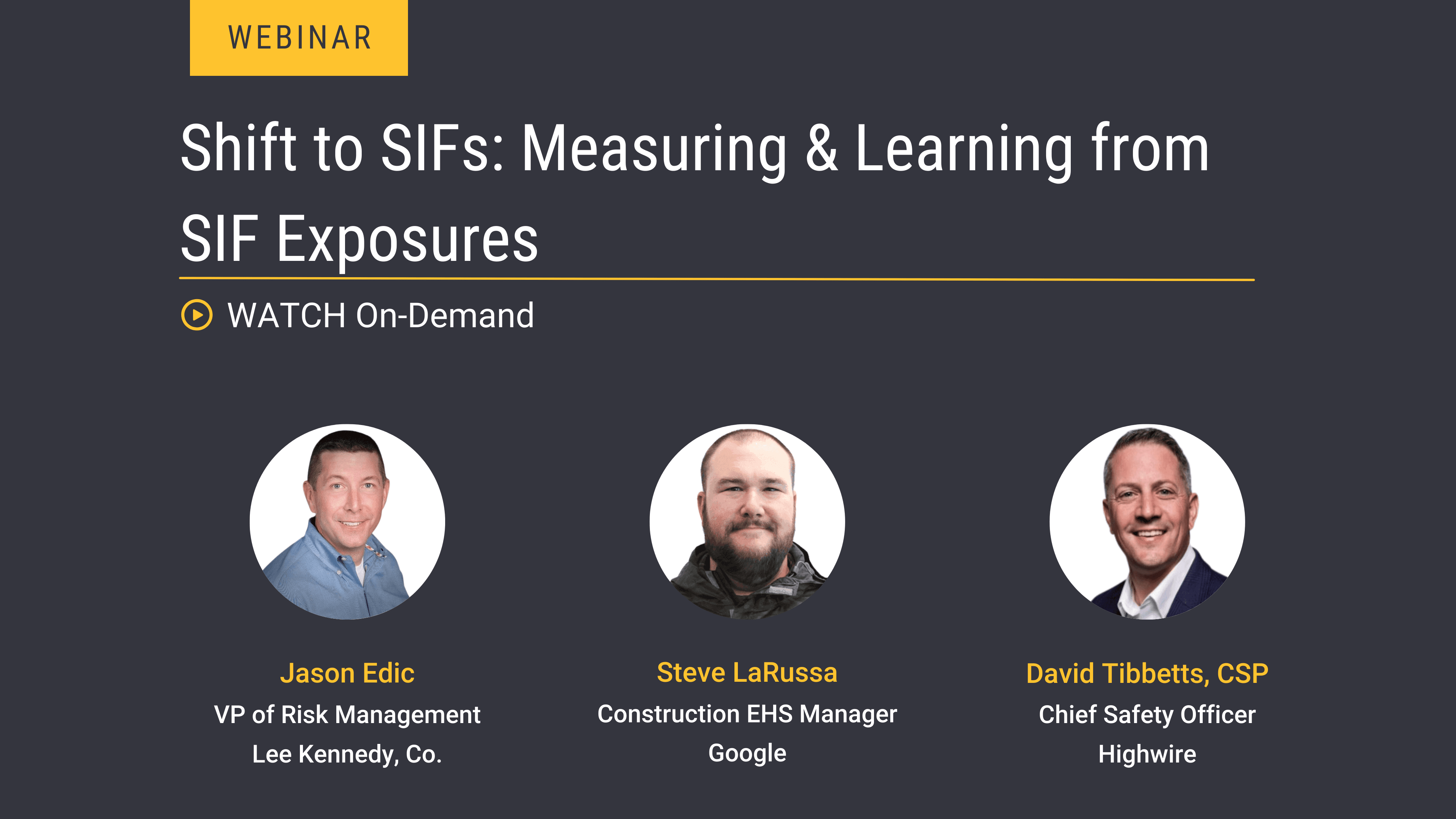
Traditional safety metrics like Total Recordable Incident Rate (TRIR) don’t always reflect the risks that lead to the most serious outcomes on construction sites. In this episode of Beyond Prequalification, hosts Dave Tibbetts and Shayne Gaffney explore why tracking Serious Injuries and Fatalities (SIFs) and SIF-potential events provides a more accurate view of jobsite safety.
They define SIFs and SIF-potential events, explain how to identify high-risk exposures, and share insights from Highwire’s SIF working group on categorizing events, uncovering root causes, and avoiding over-reliance on recordable rates.
Whether you’re a construction owner, general contractor, or safety professional, you’ll walk away with a deeper understanding of SIFs and learn practical strategies for implementing SIF-potential tracking.
Related Resources

Transcript
[00:00:13] Shayne: Hi everybody. Welcome back to Beyond Prequalification. I am joined, as always, by my colleague Dave Tibbetts. And my name is Shayne Gaffney. So today's episode, we're gonna dig into a topic that Dave and I think is really changing how the industry safety leaders think about job site risk.
And from our perspective, that's identifying incidents or events with the potential to result in serious injuries or fatalities. You may know these as SIFs or also as SIF-ps. And of course, Dave recently presented at the ASSP Safety Conference, and goal for today's podcast is just to start to unpack SIFs, SIF-ps, and then I think it would make sense to start off with just some background and definition.
So, first question, Dave, for you is, what is a SIF? You know, what is a SIF-p? And why are they so important for safety leaders to not only track, but also to understand?
[00:01:09] Dave: Let's dive in, and I will apologize, Shayne, 'cause you might have to cut me off once I get going on this topic because, you know, there's, I'm passionate about it and I just continue to be excited about the amount of passion that is happening across the industry, including at the ASSP conference recently, and just in conversations with our clients, other safety professionals. It's probably the biggest movement in safety, I would say, in the last, you know, 10 years for sure, if not longer.
It's really exciting, but at the same time, it's a really serious topic, right? Because we are talking about fatalities and other serious injuries, right? And we're talking about it because fatality rates in construction, and really probably across all industries, have been pretty flat for the last 15 years, right?
We have not been able to continue to drive down, fatality rate in construction the same way that we've been able to really successfully continue to drive down, total recordable incident rate, which is a great success, and we'll probably touch on that a little bit more as we go.
[00:02:11] Shayne: Sure.
[00:02:11] Dave: But as we think just a little bit about background and definitions, right.
A SIF is a serious injury or fatality that is an injury that results in a fatality. It is life-ending, or it is an injury that is life-threatening. Right? It requires immediate, lifesaving medical attention to prevent a fatality. Or it is life-altering, meaning essentially simply put, it results in a permanent disability or impairment for the injured worker that is a serious injury or fatality.
Now, the occurrence of those, while they are relatively rare, there are too many of them still, right? We average somewhere around a thousand fatalities in construction every year, so there's too many of them. At the same time, it's a relatively small sample size in terms of like the ability to learn from them.
So when we think about SIF potential events or events that had the potential to result in a serious injury or fatality, there's a lot of focus on identifying and categorizing those events because there are going to be more of them. They did not result in a SIF, which is a good thing, but there was exposure that had the potential to, so that is a serious exposure.
Now, when we talk about events, I want to just level set on what we're talking about because sometimes when people think about SIF potential events, they are only thinking about the actual incidents that had SIF potential. Meaning like, Hey, it was a first aid case, but it had SIF potential. It was a recordable case, but it had SIF potential, or it was a near miss, right?
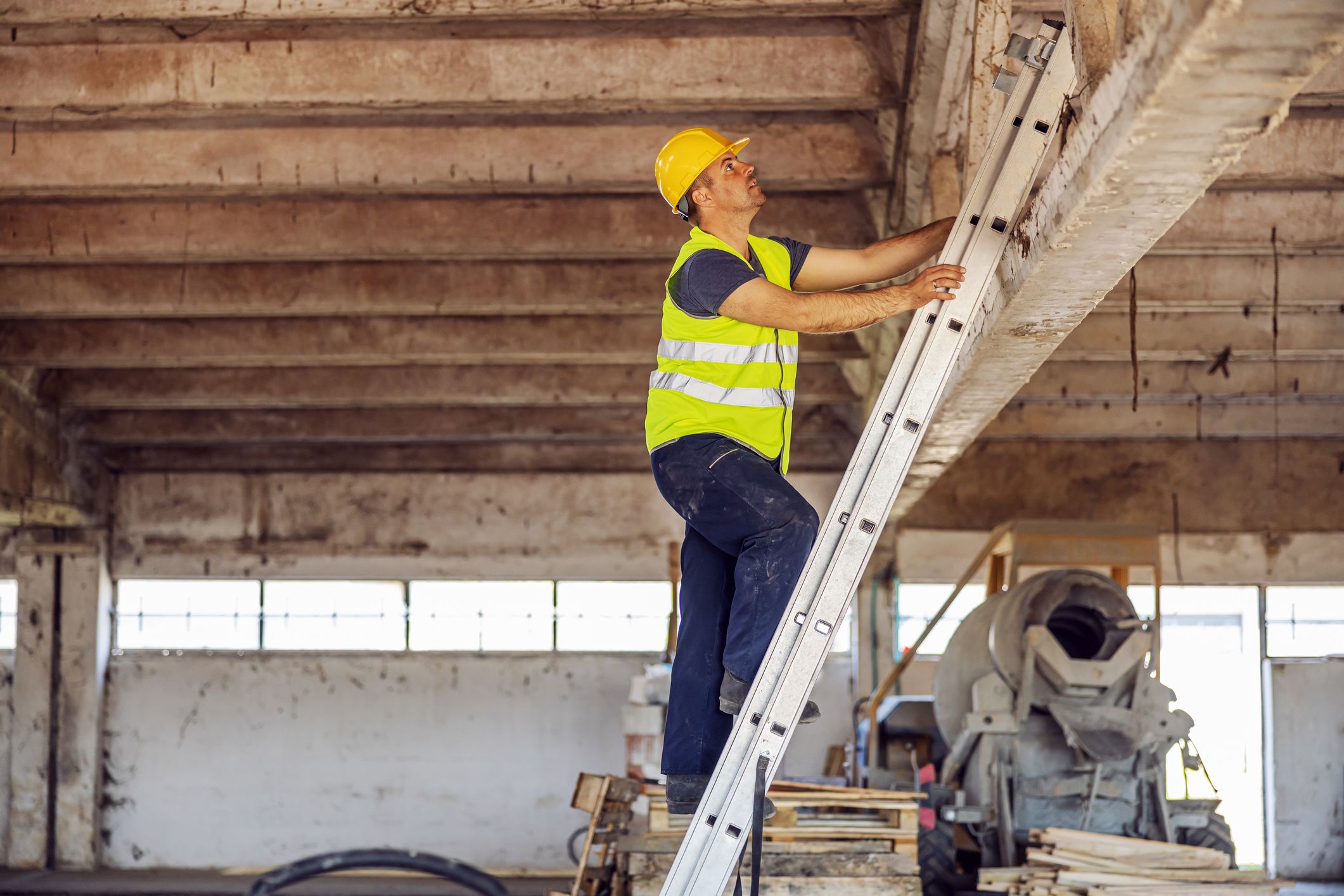
Something occurred. There was a release of energy that had SIF potential. But I think it's really important to also think about exposures. Right? An exposure that you observe out in the field. Somebody exposed to a significant fall, somebody exposed to an unprotected trench, somebody using a stepladder improperly, working at eight feet or nine feet up in the air, right?
Those are events, those are exposures that, should something go wrong, there's a likelihood that that is going to result in a serious injury or fatality. So that's really what we're talking about when we talk about events with SIF potential or exposures with SIF potential.
[00:04:23] Shayne: Great. So you already mentioned this a little bit, but TRIR or total recordable incident rates, those other, and also other just traditional safety metrics.
That's kind of a stark contrast between them and SIFs, and really the concept of SIFs, but also the tracking of SIF-ps has, I think, become more popular. I think you would agree with that, but why do you think the industry at large has become just so focused on TRIR and those other traditional safety metrics? And more importantly, what are we really missing by doing that?
[00:04:59] Dave: Yeah, so I think one of the great things about total recordable incident rate or DART rate, right, days away, restricted duty case rate, those all are things that have been measured for a long time. We started measuring those 30-plus years ago. And the great thing about it is, we were all kind of pushing in the same direction. We had recognized at that point that there were too many workers getting injured, and that's all types of Injuries, right? From sort of minor injuries, to some that are a little bit more significant, to even more serious types of injuries.
But everybody in the industry knows what a recordable incident rate was. It was defined for us by OSHA, by federal regulation, so everybody was categorizing recordable incidents the same way. Everybody began to investigate them, to identify contributing factors, to identify corrective action, and to make changes that ultimately would help to prevent similar injuries from occurring again.
And to be clear, there is absolutely nothing wrong with that. That is, was, and continues to be the right thing to do. Right? There are a lot of reasons why tracking recordable rate and trying to drive it down is still valid. I want to make sure that, at least from my perspective, yes, there are some limitations with TRIR, and using it in certain ways, but there is still value in continuing to try to drive it down. Hundreds of thousands of fewer workers are getting injured today, compared to 30 years ago. And that's a great thing for the workers, for morale, and also, there are real business implications to not having injuries.
From a cost perspective, from a productivity perspective. All of those things are important. But I think, in the grand scheme of things, the thought was always that if we can drive down the frequency of all incidents, we will also drive down the frequency of fatalities. That is just a philosophy that has been around for a long time, and, really, people have started to realize that that's not the case, right? Because fatality rates have been flat.
So when we focus a ton of our attention on recordables and tracking them and understanding when they occur, and everybody in our organization, including leadership at the highest levels, knows, Hey, how many recordables did we have last year? What was our recordable incident rate last year? Was it better than the year before? How does it compare to the industry average?
Leaders at all companies can answer those questions, but nobody can really answer the question, how many events did we have that could have resulted in something very serious? A serious injury or fatality? How many exposures did we have? How many incidents were near misses did we have that didn't result in something too serious, but could have? And what were the contributing factors? What are we gonna do to prevent that from happening again?
People cannot answer that question today. In some organizations, they might be a little further along, and maybe they can. If you can't answer that question, then you're gonna have a really difficult time preventing those types of events or exposures, or incidents from recurring again. So that's why I think there's a really big opportunity if we can answer those questions. Hey, how many SIF potential events did we have last year?
Which contractors were involved? What did we learn from those events? What changes did we make to our programs or the way that we plan our work, or the way that we focus on high-risk activities? Those are some of the things that are driving the momentum here that I think safety professionals and industry leaders believe when we start to focus on those things and learn from them, we can maybe begin to drive fatality rates down.
It's an important shift, and I think that there's just huge alignment on that across the industry.
[00:08:50] Shayne: That's very interesting.
So basically, recordable rates, DART rates, all those things have decreased, but fatalities haven't. And the thought is that if you can track SIFs and track SIF-ps, that we should, as a result, understand more about what kinds of exposures workers have had, how to control those exposures.
And then theoretically, fatalities should reduce as a result of just having more data and more tracking alongside those.
[00:09:16] Dave: Yeah, I think if you know what they say, right? There's that saying, what gets measured, improves, right? Or measure what matters, right? And if you look at recordable rate, again, a huge success story.
It's decreased by 80% over the course of the last 30 years. And it's because we were measuring it and we were learning from it, and then we were doing things to prevent similar occurrences from happening again. So. If you use that same logic, if we can all across industry, even though this isn't being driven by regulation yet.
If we can all across industry, come to some sort of alignment on what is the definition of a SIF potential event? What are the kind of ways that we should categorize those things and learn from them? And then also, I wanna recognize that categorizing them, investigating them, learning from them is one part, and it's an important part.
The other part is. That will help us shift the focus from a planning perspective to ask the question, what are the activities that we're gonna have on our job that have the potential to result in a SIF? Shayne, you've heard the term sticky, right? That's another common term that is a little more tangible, I think, to people out in the field.
STKY, stuff that can kill you on this project. Right? Focusing the attention on the highest risk activities. Asking that question at the start of each day or at the start of each project. What are the activities, what are the exposures that we might encounter today, that have the potential to result in a serious injury or fatality?
So there's a planning element, there's a kind of focus element on those high-risk activities, but then there's also the learning element from categorizing and investigating them when they do occur. So there's for sure kind of two different key elements there.
[00:11:11] Shayne: So let's go a little bit deeper into that specifically.
If we put your field shoes on for a moment and you're on a job set again, and then you see something, you mentioned like an unprotected trench or an exposure to a high stepladder that is maybe eight or nine feet, but improper, how would you address or potentially correct that situation in the moment when you actually see it?
[00:11:38] Dave: I think I want to talk about this from the perspective of how those things have been historically handled, and myself being back out in the field 15 years ago or 10 years ago, to like. Why the shift to focusing on SIF potential events and high-risk activities would change the approach to this.
Right? There's a slide that I often share when I do presentations about SIF potential events, and there are basically just two pictures on the slide. One is a picture of somebody who has a laceration to their thumb, right? That required stitches, but that's a recordable incident. Right? No potential to become anything more severe in terms of the outcome.
It was a recordable that required stitches. That was it. A lot of attention gets paid to that at organizations, right? We had a recordable. We need to investigate that. We need to learn from it. We need to understand why it happened, and we need to prevent it from happening again. Again, I'm not saying that's not wrong, it's right to do that, but at the same time, the other picture that I typically have, and I use this picture 'cause it's not super extreme, and it's something that happens on job sites every day.
The other picture that I share is a picture that I took out on one of my job sites 15 years ago, and it's a worker standing on the very top of an eight-foot step ladder. Not the top step, but the very top. The reason he was standing on it was because the ceiling grid had been put in place; he needed to get up above it, he couldn't use a taller ladder, or he didn't have one.
Whatever the reason was, he's standing on top of an eight-foot step ladder. And I'm gonna ask you, Shayne, have you ever stood, not on the very top, but on the top step of a stepladder?
[00:13:20] Shayne: The top step I have, yes.
[00:13:23] Dave: Yeah. And the moment that you go from the second to top step to that top step, can you tell that that's probably not a good idea?
[00:13:32] Shayne: Yes.
[00:13:32] Dave: You know it, right? You know that that's a really risky behavior because you shift your weight, you overreach, you're much more likely to knock that ladder over out from under you, and fall. And if you fall eight feet, when that ladder kicks out from underneath you, and you land on a concrete floor, or you land on something else on your way down.
There's significant energy there. There's a lot of talk about the energy wheel and the amount of energy present when we're talking about SIFs. If you fall from the top of an eight-foot step ladder, you're generating a lot of energy, and when you hit the ground, there's a potential for a serious injury or fatality.
Now, when I come across an exposure like that in the field, in the past, or when safety professionals or field supervisors come across that today, what do they do? They address it. Sure. They don't walk by it; they address it. Hey, can you come down off that ladder? You shouldn't be up there on that step. Can you come down, get another ladder, talk to your foreman, whatever it is?
We need to do that work more safely. So you address it in that moment, and oftentimes you move on about your day. Hey, I corrected that condition, I corrected that behavior. We got a ladder, we move on. So great. We corrected it, but now, over the course of a year, how many times does something like that happen?
I don't know. We can't answer that question today. So we can't identify those trends. We can't identify the contractors that have been involved in the most situations like that. We also lose a more, a better opportunity to learn from that by kind of, not investigating it to any extent.
So again, when you ask the question at the end of the year, how many recordables did we have? What's our recordable rate? Most people can answer that. But when you ask the question, how many situations like that ladder exposure did we have? And what did we do about them? Oftentimes, that is not something that's tracked, shared, discussed, and we lose the opportunity to learn from that.
And that's just one simple example. Obviously, there are even some more serious ones. A 15-foot fall exposure, someone exposed to energized electrical, exposed to heavy equipment, moving around the job site, an unprotected trench. Those things get addressed immediately. We move on about our day, and we often lose the context over the course of the year to be able to focus in on those things and say, Hey, what are we missing?
What are we doing wrong that allowed that situation or exposure to occur? So that's kind of one of the main points of what we're talking about with focusing on SIF potential events.
[00:16:12] Shayne: So you kinda mentioned this, but if we take that stepladder as an example, the stepladder was the result potentially of maybe the crew not having a large enough ladder or maybe the worker not being trained to not step on the top step of a ladder. So it seems like we've talked a lot about the output, but what do you think some of the more common root causes that actually expose people to SIF risk are?
[00:16:40] Dave: Yeah, I think you kind of touched on a couple of
them there. One of the easiest things for people to do is to say that worker made a bad choice, right? That worker knew better than to do that. That's the easy way out. And so what has historically been identified as the root cause? That worker made a personal choice, right? And again, that's the easy way out, but what led to that happening?
What type of safety culture does that company have? Does that worker feel like they have the permission to stop work and say, Hey, I'm not prepared, I don't have the right equipment. I don't, I feel like there's a hazard here that I'm not prepared to deal with.
Right. When we talk about root causes we, and when I talk to some of my peers and some of our clients, we often say that that is the absolute last resort to identify personal choice as the root cause. Only after you have eliminated all of these other things can you point to that, right? You need to look at, well, how was that work planned?
Did we do a good job of planning that work? Was there a plan even in place? Did the plan identify the high-risk or high-energy exposure? If it did, did it identify clearly adequate controls, right? So planning. Does the worker have adequate training? Is the worker trained to be able to recognize that hazard?
Was our training effective? Are we able to even monitor whether or not our training was effective? Have we been consistently enforcing our standards, our program, our expectations? Only after you've identified that we've done all of those other things really well, should we be leaning on the choice of the worker.
So I think that's really important to understand. So planning, training, enforcement, focusing on high-risk activities. Those are all the things that we really need to be thinking about because again, it's really easy to say. It's easy in terms of like, what do we do from here? To be able to say, Oh, that was the worker's fault.
You know, the worker made a bad choice. Let's send that worker home for a day. Send that worker home for a day. What does that solve? Nobody learned anything. That same thing is gonna happen a week later. Maybe that worker goes to another job and does the same thing, exhibits that same behavior.
So, those are some of the things that I think about, and why I would really strongly encourage people to really recognize and think about personal choice as the absolute last resort. And don't use it until you've ruled out all of those other potential gaps that might have been present.
[00:19:29] Shayne: It's root cause analysis. It's not fun. It's hard to do, but it's obviously a lot more beneficial in the long term than just blaming somebody for a personal decision.
[00:19:39] Dave: Yeah, and the thing is, we're doing that when there's a recordable incident, right? When there's a recordable incident, whether it's a strain or a sprain or a twisted ankle, or someone that required stitches, or maybe it is somebody who missed two weeks' worth of work.
In all of those cases, we are doing that investigation and we are doing that root cause analysis. But when it comes to exposures and behaviors or conditions that we see in the field, where energy was not released. Those are the opportunities where we are missing out because we're not doing that root cause analysis, and maybe we're just defaulting to, you know what, that person made a bad choice, and there were probably so many other factors that led to that.
[00:20:18] Shayne: For sure. Something else that I think is interesting about you is you've built SIF working group. So I think you've included people and safety leaders from companies like Rosendin, Rowan, and also Google. But really from this conversation, what have you learned from those people, from those conversations and anything that has like really surprised you or, or kind of shocked you in that regard?
[00:20:43] Dave: Yeah. I mean, I wouldn't say anything that has surprised me. And one of the coolest parts of working at Highwire is that we get to work with companies like that, right? Really sophisticated companies that care a lot about people and workers, and safety. And so those companies, amongst others, there are seven or eight companies that are on that SIF working group.
And it's, it's growing because other clients are joining it. We talk a lot about the foundation that has been laid by other organizations who are further along than us, to be honest, right? The Construction Safety Research Alliance. I plug every single time I talk about SIFs.
If you're listening to this podcast and you're interested in starting your journey towards tracking and learning from events with SIF potential, go to the Construction Safety Research Alliance website. They've done amazing research. They work with amazing organizations who have been studying this for a long time.
There's a ton of valuable resources that they've provided. And I lean on all of that when I get together with the SIF working group and even when I have conversations like we're having today. I'm standing on their shoulders to some extent, but also just wanting to continue to drive the word out about this and why it's important.
So, I think one of the things that's been common, and I think a lot of safety professionals have experienced this. A lot of general contractors have experienced something like this when they're working with their owners. One of the things that when we talk about over-reliance on TRIR, I also want to mention, like overreaction to TRIR.
It happens a lot within our own organizations or when we are standing or sitting in front of the asset owner that we're working for. Early on in a project, the project has had two recordable incidents. Project has only worked a hundred thousand hours so far, but they had two recordables.
Now, the recordable rate for that project is through the roof, and those incidents might have been very minor in nature. They had no potential to result in anything more serious than what happened. But we're so focused on total recordable incident rate that we're even using it when we're looking at a very short window of time, and we're not considering the context around it.
You could have two different projects, one that has had two recordable incidents early on, but they're doing a really great job. Identifying high-risk activities, planning that high-risk work, and executing that high-risk work safely. But they've had a couple of minor recordables, and everyone on that project is spun up into a tizzy, demanding a project improvement plan, using a lot of resources dedicated towards that.
That is an overreaction to an elevated total recordable incident rate. Do we wanna understand those recordables? Yeah, of course we do. Do we wanna prevent them from happening again? Yes, of course we do. But let's recognize that there are a lot of really great things happening on that project from an execution perspective and a culture perspective.
On the flip side, you could have a project that has had zero recordable incidents. Recordable rate is zero. Worked a hundred thousand hours, but we've identified three or four or five exposures on that job that had the potential to result in a serious injury or fatality. We corrected them immediately.
We didn't do anything more. Which project has more risk? That is the risk that comes with focusing too much on total recordable incident rate. So those are some of the conversations we have. Those are some of the challenges that the safety leaders at the companies that are on the working group face. And I think those are the types of conversations that they are having now with their leadership and saying, Hey, we need to start looking at some other things to truly understand what our risk profile looks like, and what conversations we should be having to improve our performance going forward. And think about how do we truly measure our safety performance based on the risks that we truly have on our projects and across our projects with our contractors who are our partners?
[00:24:50] Shayne: It's also kind of interesting parallel, I guess, between reading a safety manual and seeing a program or seeing an initiative or seeing something is great, but you really have to understand the quality and the depth of that program to truly know if it is something that's gonna make a difference in the long term. Right? It's kind of interesting where, like recordable rates tell you a little bit, but they don't really tell you a lot of the depth or the breadth of what the incident happened.
And it feels like SIFs potentially can add a little bit of that color to it. Maybe I'm wrong there, but interesting parallels there, which is kind of interesting.
[00:25:28] Dave: Yep, absolutely right. A contractor that looks great on paper because they have really strong, well-written safety programs and management systems, and their recordable rate is low. That's insightful. But I also want to understand, are they able to execute on that when they're out in the field? Are they doing the things that they say they're gonna do?
Is their recordable rate actually indicative of the way that they deliver work and the risks that they might present? It's an insight that I want to understand, but it's also very important to be able to look at. How are they actually performing when boots hit the ground and high-risk activities are underway? How are those being managed?
And when we put those two things together, we paint a more complete picture of risk, and we need to be having very directed conversations when we see exposures that have very serious potential to result in the worst type of outcomes.
[00:26:23] Shayne: Interesting. So obviously, we are a technology company, right?
Highwire, that's kind of what we do day in and day out. How does technology, and obviously something like Highwire, enable better SIF-p tracking, but also visibility?
[00:26:36] Dave: Yeah, it's important for companies to track incidents in some way, shape, or form. Technology can help with that, especially identifying trends and creating a consistent approach to tracking and categorizing those things.
So, you know, through the SIF working group, for the first six months of our conversations, it was not about necessarily technology and how HighWire's technology would help. It was really about establishing that foundation of what is the definition of a SIF. How do we want to define it?
What is a SIF potential event? What types of events should we be considering? Again, near misses versus exposures versus recordables. Right. Laying the foundation for that, and then it became about, alright. We've got that solid foundation, we have a good understanding of how we're gonna define them and categorizing them.
Now we want to be able to track them and investigate them consistently. And so that's what we've been focused on. Focused on the categorization and the investigation. I want to recognize that there's also a very important part of all of this, which is not just categorizing them when they do occur, but how do we prevent them from happening in the future?
How do we shift the focus to the high-risk activities? That's a really important part of it. However, when you do begin to define them and categorize them, it facilitates conversation with leadership around, okay, why are we making this shift? What does the shift actually look like for us in practice?
What type of data are we gonna be able to share with our leadership around these metrics? And then what are we gonna do with that data? Prevention through pretest planning and job hazard analysis, all of that is obviously really important. In a lot of ways, that is defined and focus is given to that by looking at the events that have occurred, right?
That's how we were successful in driving recordable rate down because we measured them and we learned from them. So categorizing and investigating is an important part of it. Reporting them is an important part of it. So what we've been focused on is not just incidents, but also when we think about inspections, our clients are out in the field, and they are conducting inspections.
They are observing behaviors and conditions that are unsafe. Not every unsafe condition or behavior is created equally. Some of them are sort of minor in nature, but some of them are behaviors or conditions that have the potential to result in a serious injury or fatality. So what we've begun to do over the course of the last year plus is categorize events and events include near misses, recordable cases, first aid cases, and even unsafe conditions or unsafe behaviors observed during inspections.
Categorizing those and reviewing them and investigating them, because there's a lot to be learned from those. So when we think about doing that, the data then allows us to increase visibility by having conversations with individual contractors that have been involved, conversations with our project teams that maybe we're seeing a number of SIF potential events, and then conversations with our organization to say, Hey, here's where we're kind of falling down.
Here's the exposures that we've seen. What do we need to do as an organization to prevent these from happening in the future? And there's an important point that I wanna make, and I think that this has been a struggle in the safety profession for a long time. We have to think about managing this and talking about this in a way that doesn't create that negative perception where people are, people become hesitant to identify something serious. Because, hey, when we identify something that had SIF potential, everything gets blown up. It becomes very negative, and everybody has, you know, hey, pointing the finger at this person, Hey, explain to me why this happened. How did you let this happen?
We've gotta prevent this from happening again. It's part of the thing that happens with reporting near misses or reporting incidents that occur. We have to make sure that everybody understands that this is about opportunities to learn. Yes, we're gonna talk about why it happened and how to prevent it from happening, but we have to be very mindful of the perception that we create based on the way that we react to these types of things occurring, being reported, and being investigated.
So I think that's a a very important part for any safety professional who's thinking about implementing something like this in their organization. What can we learn from the past? In terms of making sure that we present this and handle this and talk about this in the right way.
[00:31:20] Shayne: Great. Well, you're right, Dave.
You could talk about this for literally all day. So, thank you for doing that. Any closing statements or any summaries or anything else that you wanna provide?
[00:31:33] Dave: I would just say please reach out to me if you want to talk more about this. Can reach me at dave@highwire.com. We have some resources on our website.
We've had some webinars with some of our colleagues and clients that are available as well. It can seem overwhelming to start down this path, but I would say, just some recommendations, you don't have to start big, right? You can start by defining a SIF, defining a SIF potential event. Having those conversations with your own organization.
You can start by categorizing them and then investigating them. And what that's gonna lead to is a lot of conversation around identifying high-risk activities. How do we plan our high-risk activities? What does our pre-construction process look like when we're talking to our contractors?
Getting everybody focused more on the most serious exposures that could occur on our projects. So even though you might start with defining it and then categorizing events that had it, it's gonna facilitate a lot of conversations within your organization that start you down that path. And again, I would be happy to chat with anybody who wants to discuss it further, talk more about the SIF working group and what we've learned so far, some of the data that we've collected.
Thanks for everyone who listened, and like I said, there's a ton of momentum around it, passionate about it, so please reach out, share your thoughts, share your experiences, and, love to talk more about it.
[00:33:03] Shayne: Always great to chat, Dave. Great podcast per usual, very eye-opening, I think a lot of great takeaways, and yeah, as Dave mentioned, highwire.com to learn more about SIF-ps, and then yeah, dave@highwire, shayne@highwire.com. And yeah, thanks for tuning in. We'll see you all on the next one.