Shockey: Improve Risk Visibility with Project-Based Prequalification
How do you manage subcontractor risk when everything can change mid-project?
In this episode of Beyond Prequalification, Shayne Gaffney, VP of Product Transformation and Delivery at Veriforce, is joined by Rob Wagoner, Vice President of Operations, and Haley Russell, Safety and Prequalification Coordinator at Howard Shockey & Sons, to discuss their shift from an annual subcontractor evaluation to project-based prequalification.
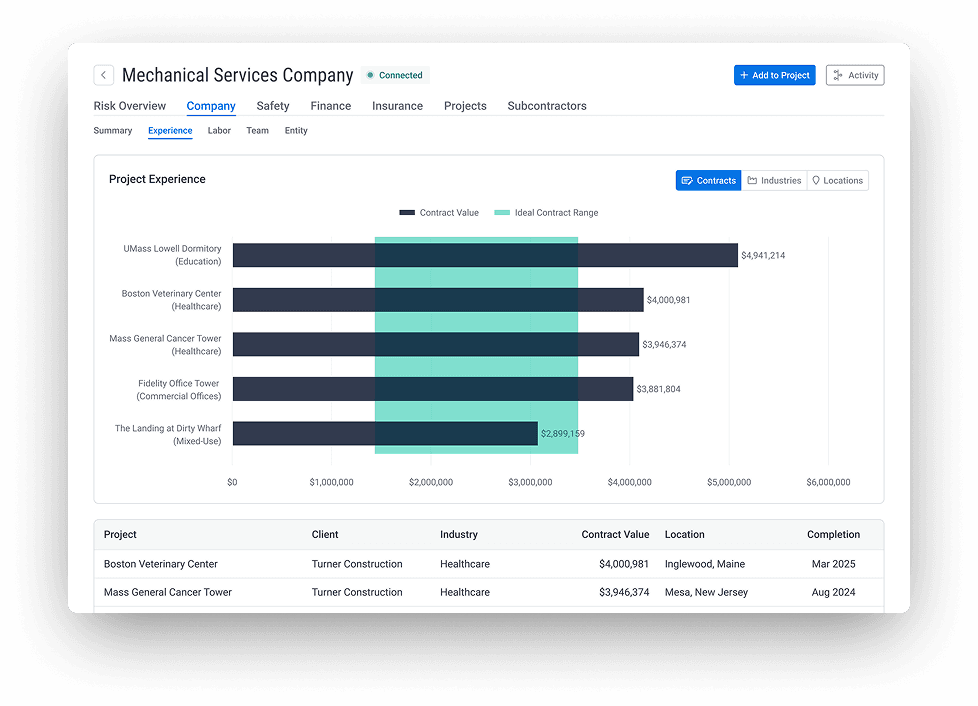
With greater visibility into subcontractor capacity, backlog, and financial health, their team has moved beyond static, once-a-year evaluations to a more dynamic, real-time approach. They share how this shift has improved decision-making, uncovered hidden risks, and strengthened accountability across projects. Haley and Rob also discuss how their prequalification process supports Shockey’s subcontractor default insurance (SDI) program and the practical steps they take to mitigate risk.
Whether you’re refining your prequalification strategy or considering an SDI program, this episode offers practical insights into building a more proactive, transparent, and resilient approach to subcontractor risk management.
Meet the Guests
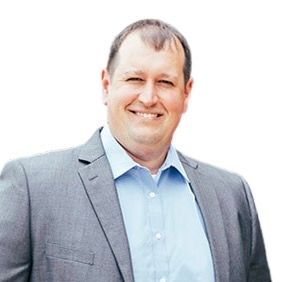
Rob Wagoner
Howard Shockey & Sons, Inc., Vice President of Operations
Rob Wagoner is the Vice President of Operations at Howard Shockey & Sons, where he oversees project delivery, team performance, and operational excellence across the company’s diverse portfolio. With over two decades of experience in construction management, Rob has led major commercial and institutional projects throughout the Mid-Atlantic region. He is dedicated to driving collaboration, quality, and client satisfaction on every build.
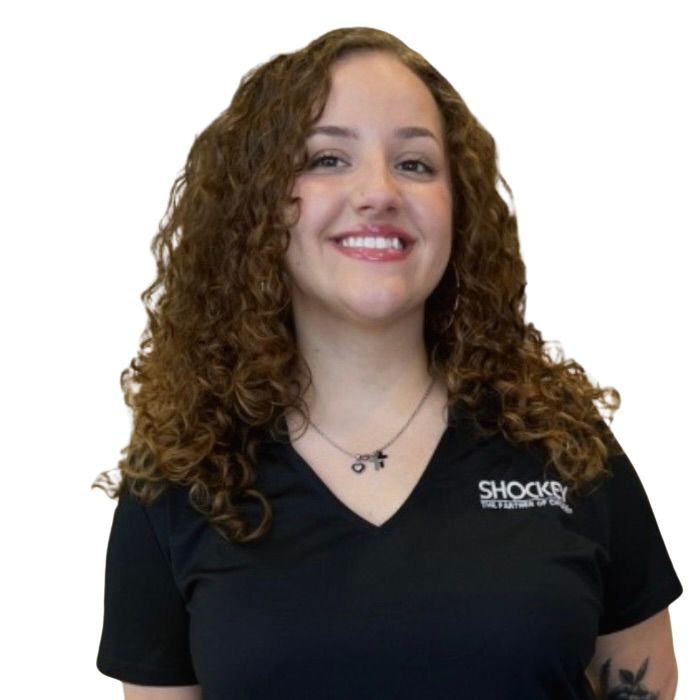
Haley Russell
Howard Shockey & Sons, Inc., Safety and Prequalification Coordinator
Haley Russell is the Safety and Prequalification Coordinator at Howard Shockey & Sons, where she supports operations teams in evaluating contractors across all projects. Haley helps ensure every contractor meets Shockey’s high standards for safety and performance.
Related Resources

Transcript
[00:01:05] Shayne Gaffney: Welcome, everyone. Thank you for joining us today. I'm Shayne Gaffney, Vice President of Product and Engineering at Highwire, and I'm very excited to talk today about prequalification best practices and, more importantly, how they support the success of an SDI program. Joined by two awesome guests today, Haley Russell, who is the safety and also prequalification coordinator.
And Rob Wagoner, who is the Vice President of operations at Howard Shockey and Sons, who is a leading GC based in Virginia. Uh, Haley, Rob, welcome. First of all, uh, really curious to have you all introduce yourselves. Share how you ended up in, uh, your current roles at Shockey. Do you wanna start first, Rob?
[00:01:45] Rob Wagoner: Sure. I'm Rob Wagoner, vice President of Operations.
So I've worked in construction my entire life. My father owned a small construction company. We did mostly custom homes and some small commercial work. Got a civil engineering degree while I was in college at Western University. And when I graduated, I went to work for a construction company in Dulles, Virginia.
Uh, worked there for several years in several different roles. Started as assistant superintendent, superintendent, uh, moved into project manager. Ended up actually working for the real estate division of that company for a while. Then, in 2008 and 2009, during the downturn, there was not much to do in the real estate world.
So moved over to Shockey to run a high school, um, as a project manager. I've been here ever since. So, up through the ranks, I started as a project manager, project executive, and I became the director of operations in 2017. And I've been kind of head of operations since then.
[00:02:31] Shayne Gaffney: Welcome. Haley, how about yourself?
[00:02:34] Haley Russell: I actually got my role because I knew somebody that was already well established in the company, and they helped me get my foot in the door. I first started with just prequalifications, and then I slowly evolved into the safety side as well because I had some interest in it.
So it was nice to get my foot into that side as well. And I hope, I believe that it helped me get to where I am today. And. I'm also in college for a finance and accounting degree, so it's nice to see how that plays into the finance role of my job.
[00:03:02] Shayne Gaffney: Well, awesome. Thank you for the intros. I'm also curious to know a little bit more about Shockey, you know, who are your typical clients, what types of projects do you focus on, and really, where do you also operate?
[00:03:14] Rob Wagoner: So we're a family-owned general contractor. We were established in 1,896, so coming up on our 130-year anniversary. Everybody's very excited about that and proud of it. So our core markets, K-12 schools, is our number one core market by far. Um, and that comes in, you know, both SEMA risk projects and, you know, still most of the counties in Northern Virginia still lump sum hard bid pursuits as well. So we also do a lot of senior living projects.
Those are almost always negotiated SEMA risk-type work. Um, we do a lot of healthcare work, again, almost exclusively SEMA risk negotiated type projects, both new regional hospitals and a lot of in-hospital, equipment upfits, you know, keeping the doctors happy kind of stuff. We do a lot of industrial and light manufacturing projects, so many of those are design-build.
Um, Shockey has a real estate division as well, so we build a lot of warehouses for Shockey properties as well. Um, and it's every, you know, four hard walls on our roof. It could be pre-engineered metal Building. It could be precast panels, could be tilt up, um, and everything from, you know, cold, dark shell to full manufacturing facilities.
Also, we do a lot of civic projects, what we call civic projects. So it's public projects that aren't a school. And those again, come in, you know, both negotiated CMAR risk or even public-private partnerships or, you know, still lump sum hard bids as well. So those are parking garages and courthouses and police stations and wreck centers and all kinds of stuff that might fall into a, you know, working for a town or a county or a state, um, we don't do any federal government work. So, um, with our geography. So we have three offices, um, corporate offices in Winchester, Virginia, and it handles the Shenandoah Valley and Northern Virginia, Eastern Panhandle, West Virginia.
Our Richmond office handles kind of Fredericksburg, Virginia, down to Richmond, the counties around Richmond, and then down to North Carolina Line. And then our Frederick, Maryland office handles Maryland and Maryland for us is western county of Maryland, down to the Bay Bridge. Um, for those from the area would know, like we don't, we're not going across the bridge.
We don't wanna be out on the eastern shore.
[00:05:02] Shayne Gaffney: Very cool. Well, let's get into the actual prequalification process that you do, and I know a little bit about prequalification. I was a big part of rebuilding what Highwire does for its prequalification process. We wanted to have Shockey on the program to highlight and learn more about the success that you've had in really reshaping your prequalification program.
And something that really stood out to me is the approach and really how you conduct prequalification on a per-project basis, rather than annually, you have this basically ongoing prequalification process, which is really interesting. So, I guess first question, why did you decide to take on a per-project approach?
[00:05:45] Rob Wagoner: Yeah, so a lot of that was, was centered around when we, when we joined with Highwire, kind of the way the system was set up. 'Cause we, we had been doing it annually for, you know, a long time. And we looked at that and said, man, that would be tough to really try to do it on a per-project basis. But if you're really truly measuring your aggregate with your subcontractor, you know, because K-12 is our number one market.
Especially in Northern Virginia, you're using the same subcontractors a lot. There's only, there's only certain market of subs that do kind of K 12 stuff in, in, in, in that area. It really is a better approach for measuring the aggregate limits. You're, you're, you're going with those subcontractors.
So we looked at it. Um, it also kind of gave us, you know, really it made us more diligent about doing it rather than just throwing it once a year, putting it in, putting it in a box, and not worrying about it. It really made us more diligent about constantly checking in on our subcontractors, um, and knowing that, hey, that next project we can award to them.
And it was pretty eye-opening when we really dug into it and started doing that. There was some things we saw that were like, wow. Yeah. Never really, really had considered that before. That was a risk. We were opening ourselves up to, so that was why we did it. I would say it's been really good.
I, I, I won't, I won't sugarcoat that it hasn't been a lot of work. It is a lot more work to do it on a per-project basis. But it's been providing a lot more clarity and a lot better risk management and planning for us on our side.
[00:06:59] Shayne Gaffney: Interesting. So let's go a step deeper there, and then I'm curious to know what kinds of things have you actually seen as you've gone to a per-project versus annual, and really, how has that improved the overall just visibility of the decision-making for your teams themselves?
[00:07:15] Rob Wagoner: Yeah, so you know, if we're doing you know. multiple school projects at one time, and maybe had the same, you know, subcontractor on one or two of them already, even though they're in staggered phases. So one of 'em may be well on our construction and one of 'em just getting started.
So we're always looking at what's the true aggregate that sub has exposure, what's the open payables that that subcontractor has left on that particular contract to measure a true aggregate for them. But there were some subs that we consider good partners and still consider good partners, but their, the overall size of their company didn't really lend itself to giving them multiple large projects at, at, at one time. Or if it did, working with them to put some risk management plans in place to do that. Um, where before we, I hate to say blindly, but we were a little bit, you know, oh yeah. That we use 'em all the time.
They're great. We should, we can go ahead and give them this job, but probably not the greatest thing from a risk management standpoint.
[00:07:59] Shayne Gaffney: That's really interesting. Historically, it was like, yeah, we got a guy.
We got a guy that does that. Like, he's great, he's awesome, or like, this team is awesome. We'll for sure use them. And that's one of the takeaways was just 'cause you have a good crew or a good sub that has the really good work doesn't mean that you shouldn't be pre-qualifying them for each projec,t and potentially they could pre-qualify out as a result of th, at 'cause they might be underwater or have too much work, be across too many projects.
All those things are huge factors and when you're pre-qualifying a subcontractor for work. So that's interesting that you have also seen that kind of lesson learned, too. I'm curious to know, too, about your prequalification workflow itself. You know, talk to me about what kind of information you collect, uh, what teams are involved.
I know that Haley is obviously a huge part of that as well. Um, I'm curious to learn more about the whole process.
[00:08:54] Haley Russell: So our prequalification process starts before we bid a project. So I actually go through our bidding platform. Everybody that accepts a bid invite, I go through, and I invite them in Highwire if they're, you know, maybe in a trade that needs a little more work.
If I have a steel sub, I know they need to be pre-qualified. If I have people that are applying, we don't typically pre-qualify suppliers. So it's just kind of deciding who needs it and who doesn't. And then once I have that, I reach out to the subs a few times, let them know what project it's for, and try to get any questions that they may need.
And sometimes I have to relate those questions to our estimating team, and we kind of go back and forth until we actually bid the project. Once we have it, I work with the estimating team and operations, so like the PM admin, project engineer, and then to get them reviewed, I go to my directors.
So most of my work is with estimating operations, my directors, and then sometimes superintendents, everything like that. Just make sure everybody who is on site is supposed to be there, but mostly get them from estimating. I get them in my court, and then I push 'em to PMs. And then from the PMs it goes to the directors.
[00:10:04] Rob Wagoner: Our CFO jumps in there once the subs have submitted all their information. They do the financial reviews, give their own score, you know, single limits, as you know. So we kind of have that Highwire score and then our CFO score as well, and measure between those two things.
And sometimes, you know, they're not usually far outta whack, but every once in a while one's higher than the other, and it's, which one are we going off of? Typically, we'll default to the CFO ultimately, but you know, it's a good decision point of can we, can we award this job or not to that subcontractor?
[00:10:30] Shayne Gaffney: Interesting. What are the typical differences you see between the scores between the CFO and what Highwire is telling you?
[00:10:39] Rob Wagoner: So Highwire is, you know, customizable and we've set it up basically on the scores we want, but every once in a while there'll be some other factors that, you know, our CFO may say, well, you know, yes, we see 'em on this, but their current cash on hand or, or things like that is, is maybe not as strong as when they first submited their stuff so like I said, they're not, they're not usually terribly far off.
[00:10:56] Shayne Gaffney: I do wanna dig in more into the backlog piece. So you had mentioned a few times, Rob, it's more looking at their aggregate, looking at their projects, things of that nature.
But how do you evaluate a, uh, sub's financials and Backlog as a part of the SDI coverage decisions?
[00:11:12] Rob Wagoner: Yeah, so we're really, really pushing to get a good WIP report from the subcontractors so we can see kinda what, what work they've got going on. Um, obviously not just with us, but with, with other projects, um, that can, you know, that can be a little bit of a struggle getting a, getting a current wip.
Sometimes they'll let 'em lag a quarter or whatever you're trying to get an updated one. But looking at that, looking at their overall exposure, looking at where they're at on some of those, some of those projects, and then have an open conversations with them of, Hey, I know you've got these two other larger projects that are gonna be running concurrently with this.
You know, what's your plan for staffing? What's your plan for manpower? How are you gonna, how are you gonna handle that? Hopefully, getting satisfactory answers out of that stuff. And then reviewing the financials, you know, we're looking at everything we, there's, there's indicators, and I, I would say the biggest limiting factor we see from a lot of subcontractors is their balance sheet just isn't, you know, they'll have a lot of cash on hand plus available credit for multiple reasons. But, you know, when we look at that, we're looking at it no differently than a surety would look at it. You know, you need to have a, a, a balance sheet that could cover some losses if you had 'em, so that's often the conversation ends up happening with the subs when they don't get qualified. Where they feel like they should be qualified is you need to keep a little more cash in the company, guys, you're not, you know, your balance sheet isn't robust enough to, to support what you think it ought to support.
[00:12:19] Shayne Gaffney: For sure. So from a ratio's perspective, are you focused really on things like current ratio, quick ratio, debt to equity, things of that nature?
[00:12:27] Rob Wagoner: We are, yeah. We review all those ratios and, and, and again, our CFO has triggers that she's looking forward to, to kind of measure those things. And the nice thing is you don't have to make any one thing a qualifier or a disqualifier. You know, if there's one thing that's a little off, and maybe the other parts are the other ratio are strong, just having those conversations with subs about what's going on here, what's happening here?
Why, why is this happening? And there's usually, you know, explainable reasons or understanding, or, hey, okay, well, that, that really is a problem. We need to put risk management plans in place if that's, that's really the situation you're in right now.
[00:12:56] Shayne Gaffney: That's great. I love how you keep saying, having conversations with the subs, 'cause that's, again, like such an important factor.
[00:13:02] Rob Wagoner: Yeah. There's no magic button that you're just gonna hit, and Highwire is gonna call sub, and they're just gonna magically put everything in there, and you don't have to do anything. That's that. I don't want people to think that's how it's gonna be.
It's there is legwork that still has to be done. And, you know, we consider our subcontractors, you know, our partners and our trade partners. I mean, those, these are, these are very open conversations we're having with them.
[00:13:18] Shayne Gaffney: That's great. Something we had discussed in our conversations leading up to this was your ability to get financials from your subs.
So historically, that's been a real challenge for other clients that use Highwire just to getting any subs to get their financials into our system. How have you had success in actually getting subs to upload their financials into a system?
[00:13:39] Haley Russell: Our main successor is communicating with subs. I think communicating with your subs, even your coworkers, for prequal is really important.
So when it comes to subcontractors, I mainly have to reach out requesting that they upload the information into Highwire, and then that's when they gimme kickback or they wanna send it outside of Highwire. So we do offer the in-person virtual meetings.
We also sign NDAs when we're asked to and just kind of make it private so they feel like they're not gonna have their information spread out, you know, to everybody. So only the directors and myself can see it. So a PM or a PE, they're not gonna see that information.
And we try to let the subcontractor know that. Typically, we do have the subcontractors upload their financial information to Highwire after I've let them know that. And then, as I said, we do still offer the in-person and virtual meetings, which people do. I think just giving them the option, making them feel comfortable, and not having it feel like it's mandatory, which it is. But I think if somebody has the pressure on it, then they're not gonna want to do it, 'cause then they're gonna feel like it's too risky.
[00:14:46] Rob Wagoner: I've been very happy with the success we've had with the subs that are very willing to just upload it directly to Highwire. And, you know, we still, there are still the personal meetings and in persons and that stuff, but that's been really limited compared to the subs that will just, we'll just eventually, you know, upload to highwire and that's ultimately better because then you're getting the highwire review of the, that information as well so that's, that's the best way for it to work and, and been super thrilled with the success rate of getting financials has increased, you know, multiple times over since we joined Highwire versus, you know, when we were doing it kind of manually before.
[00:15:16] Shayne Gaffney: I'm curious to know more, too, about the scorecard.
You mentioned there's a scorecard from Highwire, but also a scorecard from the CFO. How does that scorecard work, and also how does that, the overall quality of a sub fit into your overall prequalification process?
[00:15:33] Rob Wagoner: So it's kind of two things. So CFO is, is basically entering in the timeline where they're at with single limit and aggregate limit.
And then in addition to that, um, and obviously that's kind of what we're getting with a new, a brand new, brand new to us sub subcontractor is kind of that review from the CFO and kind of where they're at on our current subs and existing subs. So what we do at the end of a project is actually not even at the end of the project.
When the, when the subcontractors complete their work, our project manager superintendent will sit down, and we kinda have a one-page scorecard that grades them on safety, quality, schedule, and budget. And then who was the project team, um, for that subcontractor? And it's just kind of a nice thing to get saving the highwire so the next PM can go in there and look and say, Hey, you know, A, B, C Concretes going to potentially do this job for us.
What did the last PM and superintendent think of, think of a, b, c, concrete? One of the biggest things in there is who was your project team? I mean, it's not, not a mystery to anybody generally, who your foreman was and, and who your project manager for that sub can, can make two different people feel vastly different about their opinion of that particular subcontractor.
So it's good to have that input and, and kind of know what that performance was in the past. And then, and then definitely on the quality side, safety as well, you know, obviously safety, but the quality side, you know. Quality for us is, is a huge, it's a huge challenge in the industry right now.
The, the number of, of skilled tradesmen just aren't available. That used to be. So, you know, in doing rework can, you know, cost four to six times the amount of the original work, depending on how much the reworks gonna be required. And it's just a schedule killer and a morale killer. And when you build schools there, there is no tomorrow.
So we can't have scheduled killers. Right. And so that's a, that's a big part of it. You know, we have a pretty robust quality control program, but knowing that having that scorecard to kind of be able to look at that and say, Hey, this sub did a really good job, you know, in the past for us with quality or didn't.
Um, and, and, you know, and maybe that's an indicator of need to have some hard conversations with them about how are they gonna fix that in this, in this next project that we're, if we're willing to award it to them.
[00:17:25] Shayne Gaffney: Interesting. Can you speak more on how you are actually measuring quality?
It could be either objectively or it could just also just be qualitatively.
[00:17:35] Rob Wagoner: I would say the majority of it is objectively the, the superintendent's given kind of their input into, into how many issues they had to kind of direct or deal with. Quantitatively, you know, using, we use Procore, you know, and using Procore to go back in how many observations, how many punchless items, how many, you know, items, et cetera were assigned to this subcontractor. And then being objective about that, too, right?
The painter and the drywall guy are probably gonna have more overall items than, you know, the plumber did. But you know, measuring that kind of. Does that make sense on a, on a middle school? Is that a reasonable number of punch list items to consider? And our goal is zero punch list, so we're pretty hard on what's reasonable. But, you know, kind of doing that and then, you know, but, but some of it is objective and, and mostly from the superintendent about, you know, how, how did, how did that really go? How did that process really work?
[00:18:19] Shayne Gaffney: Very cool. Alright, let's shift gears into actual SDI implications for prequalification, and SDI is subcontract default insurance, if listeners have ever heard of that term before.
But I, I'm curious to know what prompted Shockey to actually start implementing an SDI model.
[00:18:38] Rob Wagoner: Yeah, so we looked at this, we were pretty far down the road with it, um, right when I was taking over as director of operations. We were, we were heavily considering it, and ultimately did not at that time, because we still do so many lump sum hard bid school projects.
We just don't feel that we could carry SDI on those projects and be competitive. Um, and then also, you know, it, there wasn't quite the, the flexibility in the model, the SDI model, then to do it on more of a per-project basis than an overall program basis. Um, so then once that flexibility came in, you know, we worked with our broker and, and, and, and kind of looked at, looked at it again, of could we do this?
Um, there certain projects we wouldn't use it on, or there certain projects we would use it on. And we really have been, you know, we're only a year into the program, a little every year into the program, but we've been implementing it on every project. And had had good success with, with even getting some of our owners on negotiated projects who maybe weren't keen about it to begin with, to kind of understand why, why it was important.
But, and we've been very competitive, you know, on, on, even on even lump sum hard bids carrying the SDI program.
[00:19:36] Shayne Gaffney: So you said you’ve been doing it for about a year now. What are some of the early either challenges or successes that you've seen?
[00:19:43] Rob Wagoner: You know, having to tell some subcontractors they're not qualified to do that particular project. Which is obviously not a, you know, it's a difficult thing to do and not something we really wanna have to do, but at some point in time, it's best for everybody, really. And successes of it just being, it's, it's made us so much more diligent on prequalifying subcontractors. It, you know, we cannot enroll with sub that has not been financially pre-qualified.
So, you know, it forces everybody's hand to, to, you know. You can't make any excuses why you're not doing it. We're gonna do it, and we have to do it for every sub. And so that's been a huge success as far as, you know, knock on wood, we haven't had any claims since we started the program, it's kind of a little early to measure all that. But, but there's definitely some reward, reward there for, for, you know, making sure we're using good subs that are qualified, even if maybe they're not quite qualified, putting the appropriate risk management plans in place to, to help that sub get that job and help us.
Make sure they're gonna get through that job successfully.
[00:20:33] Shayne Gaffney: That's a good segue 'cause I'm also curious to know, to your point about helping the sub get through that job, or maybe the sub isn't the best sub, but it's the only sub in the area. What do you do to really like, and make sure that sub doesn't default or doesn't have any risks associated with them, or not risks, but what do you do to make sure that sub has those risks minimized as much as possible?
[00:20:57] Rob Wagoner: Sure. So I mean, one, one kind of good tool, a little bit generic tool, but it's the, it's the joint check suppliers. And, you know, material suppliers and even lower-tier subcontractors, just to make sure that the money's flowing and that everybody's getting paid, is supposed to be paid, and, and to make sure that, you know, keep that process moving. And that's, you know, administratively not that easy of a one. I mean, there's a lot more paperwork and things that have to be done to do that, but it's in kind of an easy one in front, as far as it's a good control, good control measure. And most of our subcontractors are pretty, pretty open to that.
You know, agreeing with subcontractors that we're gonna do a quarterly financial review, even during the course of the project, to kind of see where they get bank statements. Do all that kind of stuff to see, see where they're at with cash. And then, you know, sitting down with the subs and being like, Hey, this is, this is where you're at.
I know you would like to have all of this scope, but you can't have all this scope. You can have this part of the scope, and somebody else is gonna do this part of the scope because all of this scope is by far too much for you to do within the limits of your single and aggregate, you know, prequalification.
So, and then there's other one-off stuff as well. But those are pretty generically the ones we kind of go to.
[00:22:00] Shayne Gaffney: Interesting. Do you ever do any, like parental guarantees or personal guarantees, anything of that nature?
[00:22:05] Rob Wagoner: Absolutely. So we do, and that's a, it's a, you know, there's a lot of owners of subcontractors who are reaching the age where they're ready to move on and retire, and, and, you know, don't necessarily have somebody to pass the company down to. So they're looking to sell the companies. There's a lot of private equity coming in to, to purchase these subcontractors. Which, you know, there's some risk involved there. So we do quite often, um, especially we work with bigger conglomerates, you know, that are, have many, many subcontractors under them.
Just getting that parental guarantee from the parent company, as a secondary measure, to make sure that, you know, they're gonna back and support that subcontractor.
[00:22:38] Shayne Gaffney: That's great. So I think to start to land this a little bit, my main takeaway is, from my perspective, which I've loved, is working with the subs, having a lot of communication, a lot of conversations with the subs, not just basically making it truly a checkbox or truly just pass-fail.
'cause again, it may be the only sub in the area, or you may have many other subs that have already pre-qualified out. It is a lot of work, so everybody needs to have a Haley on their team to do all the paperwork and all the work, and a Rob on their team to do all the work as well. Um, but again, the more work you put into it, typically the safer, the more successful a project, uh, will be.
And then yeah, really working with them on adjusted scopes if they do need to have, you know, joint checks done, parental guarantees, done, things of that nature is important too. What other advice would you all give GCs that are looking to get into an SDI program or just generally improve their prequal programs?
[00:23:37] Haley Russell: The subs that I talk to, they always mention that they appreciate how I communicate about the projects and the process for everything. So some of our subcontractors are not familiar with an SDI program, so I walk 'em through it, you know, what's expected of them and what's expected of us from the insurance company.
And once I explain that, they feel better about it. And I think some subcontractors are generally coming around to pre-qualifying, sharing the financial stuff, breaking everything down. And I think the more comfortable they get, the stronger our SDI policy will be, along with our prequalification program.
[00:24:16] Rob Wagoner: I would say on the, on the pre-qual part, as I would, I would strongly suggest to any general contractor that you, you know, really pre-qualify your subcontractors in a, in a robust manner, including financials, 'cause you will. There'll be some Oh wow stuff. There'll be some, wow, that stuff's way bigger than I thought they were, and way more capable than I thought they were.
And there'll be some Oh, wow. That's not as big and not as capable of subcontractors as I, we've always assumed that they, that they were. And then if you are considering enrolling in an SDI program, it's, it's not much different than, you know, applying for surety.
You know, there, make sure your processes and procedures are in check. Standard operating procedures are written down, and there's a lot of lifting there to go through. So there's a lot of, a lot of prep to get ready, get ready for that, which is, it's, it's been awesome for us.
It, it's, it's, you know, like I said, it could be happier with how it's going. But there is a, there's a lot of, a lot of prep work to do to get ready for that, for that application and process.
[00:25:08] Shayne Gaffney: But hopefully the juice is worth a squeeze, which is good. Yes,
[00:25:10] Rob Wagoner: Absolutely.
[00:25:12] Shayne Gaffney: Nice. So last question. I'm really curious about these responses, but where do you see prequalification heading in the next few years?
[00:25:21] Haley Russell: I think our subcontractors, within the next five years or even two years, will be more comfortable with our program. Prequalification for our end is not new, but we have a new process around it. So getting the subcontractors that we've worked with, you know, 20 years longer than I've generally had been working or even alive for the most part.
They seem to be the subcontractors that push back the most, so just getting them comfortable with the process and kind of just everything I do for our company and for them, getting them to work with me, just being comfortable. I feel like being comfortable and having subcontractors that are comfortable with your process, your employees, everything is the leading part because you don't want any negative energy for a subcontractor going on a multimillion-dollar project.
You just want everything to flow smoothly, and I think within the next five years, our process will move a lot smoother than what it has the last few years.
[00:26:23] Shayne Gaffney: What about any, like, technologies? So like, you know, do you see AI being a thing? Everybody's talking about AI. Do you see AI being a big thing or any other things of that nature that maybe make your process more efficient, maybe make your process better quality? Things of that nature.
Do you see any like trends in that direction?
[00:26:43] Rob Wagoner: Yeah, absolutely. I mean, it's going to definitely make, I think, you know, a lot of processes more efficient, and again, not the easy button, but to kind of move things from step A to step B faster than, than we have been doing it and getting it ready for, you know, a human to review it at that, at that step B point.
We're even looking into, you know, things like rag and certificates of insurance and insurance policy and things. Can we use, can we leverage AI to do that first initial review of that, to confirm it's within its limits and everything else? So we're not necessarily having an administrative assistant or an admin having to physically do that all the time.
It's coming. There's, there's no, there's no stopping. And now, so it's, it's, it's gonna change everything here in the next couple of years.
[00:27:21] Shayne Gaffney: Agreed. Yeah, and to your point, definitely, you still need a human in the loop, typically at the end of that loop. But yeah, from an efficiency standpoint, and I guess allowing that human to spend more energy and better energy in the actual decision-making process, I see that being a huge factor of using these technologies, but definitely not gonna replace a human like you or like Haley, who actually are professionals and experts at making this decision.
[00:27:48] Rob Wagoner: Yeah, we've, we've seen not even, you know, AI, but using certain other technology that, you know, other applications through other software, you know, through software of, this, it just allows somebody to do, you know, not twice as much maybe, but more than they could before, um, because of the efficiencies of it.
And so that's always, that's gonna be important. We have less people than we had before, so it, that's gonna be important moving forward.
[00:28:10] Shayne Gaffney: That's a good point, too. Nice. Well, is there anything in closing from either of you, things that we'd have missed or things you were kind of we that you would like to leave the audience with?
[00:28:21] Rob Wagoner: Um, just for me, the, again, just I, you know, can't say enough about how much in a better place we are as a company, you know, now than we were 18 months ago with implementing, you know, the more robust prequalification process and, and, and SDI for that matter. But really, the prequalification process, even without the SDI, is hugely important, and it's gonna be very important moving forward.
Like I said earlier, the landscape of the subcontractors are gonna change greatly. You know, there's gonna be a lot of subcontractors changing hands, you know, coming into business, going out of business, all those things over the next, over the next. 10 years. and, and for the GCs to manage your risk and, and kind of know where all that's gonna fall and, and, understand who's on your projects, um, is, is, you know, of great importance.
[00:29:02] Haley Russell: I think we've gained a bunch of credibility for our prequals with the SDI policy, so I think it's really helped our subcontractors be more open with us throughout the whole process.
[00:29:13] Shayne Gaffney: Love it. Well, everybody, thanks for joining Haley and Rob. Thank you so much for your time and your expertise. Uh, you both were awesome to chat with.
For the audience, if you have any questions as a follow-up, let me know at Shayne, S-H-A-Y-N-E@highwire.com. Happy to either talk to Rob and Haley more or also respond to your questions that you have for prequalification. And I'm also curious to learn more about how you are pre-qualifying and if it does differ from what Rob and Haley are doing on their end. Thanks for joining.