How do you turn millions in wrap-up losses into a model that transforms contractor risk management across the industry?
In this episode of Beyond Prequalification, David Tibbetts sits down with Garrett Burke, former Associate Director of Occupational and Construction Safety at Harvard University, to share the origin story behind Harvard’s owner-controlled insurance program (OCIP) turnaround and the creation of what would become ConstructSecure, now Highwire.
Facing significant financial losses and rising risk under its OCIP, Harvard needed a new approach. Garrett explains how he built a construction safety standard from the ground up, implemented stronger performance requirements, and developed a data-driven contractor prequalification platform to identify and target risk before it impacted projects.
What began as an internal solution to improve OCIP performance quickly gained traction beyond campus. As other owners and general contractors saw the results, the platform spun out of Harvard as ConstructSecure and ultimately evolved into Highwire.
Whether you are evaluating contractors, managing a wrap-up program, or strengthening your safety culture, this episode offers practical insight into how leadership, engagement, and proactive prequalification can drive measurable results.
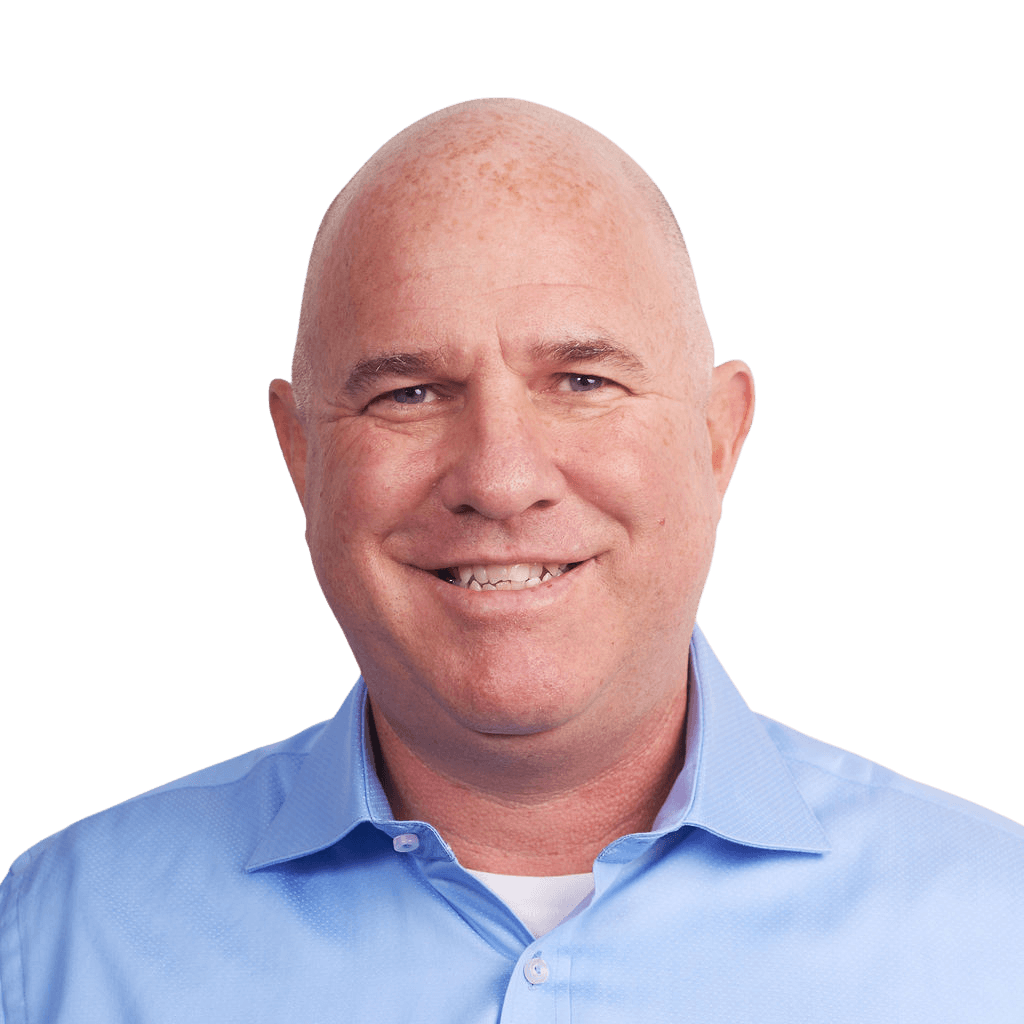
Garrett Burke
Founder
Garrett Burke is the Founder of Highwire and a longtime leader in occupational health and safety. With more than two decades of experience, he has worked with organizations to strengthen safety culture, improve risk management, and integrate proactive safety practices throughout the design and construction process. Garrett also served for many years as a Program Director and Instructor at the Harvard T.H. Chan School of Public Health, where he taught a program focused on safety in design and construction.
[00:00:13] David Tibbetts: Welcome, everyone, to another episode of Beyond Prequalification. Appreciate you taking some time to listen. Every episode of Beyond Prequalification is really important to me, and I love all the guests that we have on and appreciate the conversation. This particular guest, uh, holds a special place.
Garrett Burke is joining us today. Garrett, I consider to be a mentor of mine. Garrett hired me twice at two different places in my career that really helped to move my career along, and I really appreciate that. And, of course, Garrett has become a close friend over the years as well. So I'm really, really glad to have Garrett join me today.
Garrett, how's it going?
[00:00:54] Garrett Burke: Going well, Dave, good to see you.
[00:00:55] David Tibbetts: Yeah, good to see you too. Um, back in September of 2008, I was lucky enough to, uh, join the construction safety group at Harvard and work under Garrett there. And then we'll get into a little bit of the, uh, of the other parts of that career path along the way here.
But if you could, Garrett, share a little bit about yourself and your career. Prior to joining Harvard, 'cause Harvard will be a big part of our story, but what were you doing before you joined Harvard? You know, geez, probably 20 years ago or so,
[00:01:24] Garrett Burke: joined Harvard in 1997, so long time ago. So prior to that, I was an occupational safety officer for a consulting firm working on the Central Artery Tunnel project.
Those projects, at that time, safety officers were new. It was required by the regulations, so the construction companies needed to outsource that service. So I worked on the very first project where we were demolishing the AMP building in South Boston, and then over to the Rapid Service Press building, and then into building of one of the vent buildings along the service road, it is now. The Intercontinental is part of that vent billing as well. So in that time, I got a lot of exposure to construction, contractors, subcontractors, what made things go right on a project, what made things go wrong? And um, eventually Harvard was looking to build their own construction safety program, and I was fortunate enough to be hired there for that job.
So I started that program from scratch.
[00:02:29] David Tibbetts: Yeah. That's really awesome. And when you say the Central Artery Project, uh, some people will know that as the Big Dig, right?
[00:02:35] Garrett Burke: That's correct.
[00:02:36] David Tibbetts: So, a really cool project that really, this is not, I'm not overstating this, it transformed the city of Boston, right?
[00:02:44] Garrett Burke: Oh yeah. It took all the elevated highways and put 'em underground, and we were building and digging in areas that we'd never seen any type of construction like that before. There were still wooden water mains traversing the city when we were there. We would run into those and shut the water off for half the city because there were no, there were no maps or drawings with those things on 'em.
[00:03:06] David Tibbetts: Yeah, but for those that don't know, when you used to kinda be in many parts of downtown Boston, you just saw this giant Northeast Expressway, which was all old steel elevated roadways separating different parts of the city. And all of that is gone, and it's now underground.
And now, when you come to Boston, and you walk from the North End to Faneuil Hall across really beautiful green space, that's all part of the results of the Big Dig, right?
[00:03:32] Garrett Burke: Yes. And it was really the beginning of construction safety, or when it really started to take off, because prior to that, it was really up to contractors to decide if they wanted to wear hard hats, boots, goggles, et cetera.
And that, that project mandated a lot of that personal protective equipment and design construction, and it was unfamiliar to contractors. So it was a big learning curve for me as well as all those contractors.
[00:03:59] David Tibbetts: For sure. And as you said, probably set you up really well for, for your next experience at Harvard.
When you hired me back in 2008, you were the Associate Director of Occupational and Construction Safety. Uh, like you said, there wasn't always a dedicated construction safety group at Harvard. But I think one of the things that's central to our discussion today, and I think will be really informative for some of our guests, is in the mid 2000, Harvard was executing an owner-controlled insurance program or an OCIP, right? And for those who might be unfamiliar with an OCIP, could you talk a little bit about what an OCIP is and why Harvard decided to execute it?
[00:04:39] Garrett Burke: An owner-controlled insurance program, otherwise known as an OCIP, is when the owner takes on all of the risk. They hire the broker, they absorb that workers' comp liability, as well as the general liability. Instead of having each one of the contractors obtain their own insurance, and that insurance gets marked up each level, each tier of subcontractor, all the way through the construction manager, and then that final cost comes to the owner.
A lot of owners choose to just purchase the insurance themselves and enroll all the subcontractors and general contractors underneath them so that they can save a lot of money. The pitfall with that is contractors then sometimes don't share the same incentive to perform as well from a safety perspective because they don't have to absorb any of the costs directly associated with the loss on that, that project.
So if you're not managing your construction contractors effectively. Whether it's from an occupational safety standpoint or a general liability standpoint, you can lose a significant amount of money on a project. And that was certainly happening at Harvard at that time. At that time, the Central Artery Project was still going on.
The Logan 2000 project was wrapping up. We also had a project at Deer Island that was wrapping up, and those were all owner-controlled insurance programs that had a lot of prequalification, a lot of safety procedures, also had substance abuse testing requirements, and Harvard didn't have any of those. So a lot of the employees or construction workers that couldn't work on any of those projects ended up at Harvard, and we didn't do well at all for the first several years on our, our OCIP as a result of that.
[00:06:29] David Tibbetts: I think those are really important points. I mean, the savings that executing an OCIP offered to Harvard were obviously very appealing. Could you give a sense of kind of scale, right? Um, how much volume of construction was underway at Harvard that was included in the OCIP? What, what did that look like, ballpark, in terms of the amount, uh, or the value of contracts across those projects that were gonna be included in the OCIP?
[00:06:56] Garrett Burke: We had almost a billion dollars of capital projects under our OCIP, and of that, 850 million or 650 million, something in that range, was just labor costs alone.
So you can see the giant exposure you have there by bringing on all of those contractors. Not only are you bringing 'em on to do the work, you're also exposing your students, your faculty, your neighbors, and all of these issues to, um, the community.
[00:07:24] David Tibbetts: So some of the challenges were certainly a little more specific to the OCIP, but others were just associated with doing a lot of construction work on a very active college campus. Right? So you can kind of separate the two, right? Separate from the OCIP, where Harvard decided to take on a little more risk to realize insurance savings. You also had this recognition that we have other responsibilities. We, we need to make sure that all of the work happening at Harvard gets executed safely. Whether it's an OCIP project or an non OCIP project, right?
And the other things, you know, some of the things that I think of from my time at Harvard, you know, you can't have construction activities impacting the critical research that's happening at the university, right? Because we shut down power to a building as a result of a construction incident.
And at Harvard, the public, right? How many people come to visit Harvard's campus every year? And if you've got an open trench or an excavation in Harvard Yard that is not protected properly, you have exposures to the public. So you've gotta think about students, you've gotta think about faculty, research, you've gotta think about the public.
And last but not least, certainly you have to think about the workers, right? We have a responsibility to make sure that the workers, you know, are being provided with a safe and healthy workplace. So there's a lot of things to consider. Lots of industries have specific challenges. Those are some of the specific challenges of working at a university.
But many industries have specific challenges of their own. So you talked about around a billion dollars worth of construction, and when we talk about insurance savings, if the OCIP was performing well, right? What would the university expect to save on insurance costs across those projects, ballpark?
[00:09:04] Garrett Burke: We were losing, I would say, around 20 to $24 million a year on our OCIP. So if we, if we had done traditional insurance, we would've been better off; we would've been in the black by 12 million. So 24 million was just going out the, the window each year. So that's what led me to build the first prequalification program that was different than everything that we'd seen from the general contractors and the CMs at that time, because I could identify from the, the rough numbers who was costing us all this money with the same type of contractors. Sometimes it was a similar theme, employees that were showing up from different contractor to different contractor.
So, from analyzing all that information, that's where we began the program, and quite frankly, the only reason it took off was because of that loss. The deans and the faculty were wondering why we were spending so much money, and when I presented them with those losses and what we could do to fix that, then I got full support to build in my own construction safety program.
[00:10:16] David Tibbetts: Yeah, I think that's, a, a really interesting point to kind of stick on there. Right. So OCIP offers tens of millions of dollars worth of savings, but the caveat there is that the projects have to perform well. The risk has to be managed well, right? We need to make sure that we're doing all that, all that we can to reduce incidents, to manage incidents when they do occur, to plan the work and execute the work safely so we don't have incidents. And that's not what was happening in the first 18 months, like you said. Right? There was a significant amount of incidents, a significant amount of claims, and the promise that the OCIP offered, it wasn't gonna be realized if it continued down that path. So you talked about, you know, what that allowed you to do.
You were able to use the data to make a case and say, Hey, here are some steps that we can take to turn the performance of the OCIP around. If we don't take some of these steps, we're at risk of losing money as opposed to saving money. What were some of those specific things that you, that you did that you garnered support for that you know, helped you kind of turn things around?
[00:11:18] Garrett Burke: You have to remember, it wasn't Harvard's intent to do anything different. They relied on the construction managers and the general contractors to vet all of the contractors and to provide their own specifications for safety-related performance. At that time, there was, uh, definitely a sentiment among the lawyers and those people that it was solely the contractor's problem, safety, and we need to be all hands off. And part of the negotiation to build our own construction program was working with this, the legal counsel, to show them, Hey, look, this is what's going on. We're not putting ourselves at risk. And, quite frankly, if we institute programs and plans and processes here that eliminate risk, then there's gonna be fewer incidents, and as a result, we're less likely to be sued for any type of related issue because the incidents are not happening and they're not occurring.
So that took some wrangling, but eventually. I think, well, we know that they saw my way and I was able to, to build the program at first, and that started just with a paper-based program. What were gonna be their performance standards from a safety perspective, whether it was lagging indicators and metrics from that perspective, but. One of the big things we wanted to have on there as well was the substance abuse program, because we knew that the people that were failing the substance abuse program and all these other projects were ending up working at Harvard.
And in a lot of the incidents that we had seen were from people that shouldn't have been working on the project for one reason or another. So again, that took a bunch of negotiation with the Office of General Counsel and some of the senior administrators, that this was an important part of that program.
So it was really two-pronged, at first, was, let's build out the performance standards from a safety perspective, but let's also put in there substance abuse program so we don't have the poor performance showing up at our, our job site.
[00:13:23] David Tibbetts: So a few things happened, right? You created a dedicated construction safety group.
Part of that was developing a construction EHNS standard, right at the university, to sort of set expectations. I think something else you mentioned is important, which is to say, you know, many owners have the sort of mindset that we hire a general contractor to do this work. We are gonna turn the site over to them.
It's their responsibility, it's their risk. Right? Hands off is actually the right approach, but I don't think that that mindset exists as much today. And you were able to flip that mindset to say, Hey, we are the owner, OCIP or not, we are the owner, and we are exposed to risk if construction activities are not managed well and result in significant incidents on our campus, right?
[00:14:11] Garrett Burke: That's correct. And, and part of the information I was able to bring to these meetings was there was an incident, it was a small incident, an individual was hurt, not severely, but hurt well enough, but the, the headline in the globe at that time was, uh, such and such construction worker at Harvard University has leg broken or whatever it was at that time.
And so the contractor's name is never in the headlines. It was always gonna be Harvard seeing with all any big corporation, it, the construction worker, that information gets pinned on the, the owner of the company.
[00:14:44] David Tibbetts: So there's certainly some reputational risk there as well.
One of the other things that happened that helped turn the performance around was bringing in the Graham company, right?
Uh, a new broker to kind of manage, uh, you know, help manage risk and provide loss control services. Why was that important to help turn the performance around as well?
[00:15:03] Garrett Burke: So while we were initially building the program, we were using a lot of the Graham companies' best information that they had gained over the years, and this was the best solution to this problem. And let's put that in our, our construction safety standard. In addition, they offered us three or four safety professionals that would walk around to the job site on an individual day, evaluate what was going on there, and hold contractors to the performance standards that we were, we were requiring.
And at that time, we didn't have the resources. We were still coming up to speed and to see and have them mentor our field staff. What's the best way to do these inspections? That was incredibly valuable for us. And eventually, we got so good at it, we didn't need to use them in the future. We used them, but in a much lesser role.
[00:15:56] David Tibbetts: Yeah. So I, I think another important consideration there is, kind of as you're getting your wrap-up program off the ground, as you're building the kind of structure that you need to support an OCIP, think about what kind of services you can get from your insurance carrier, from your insurance broker, because it's critical, right?
The performance of the project is critical, and those carriers, those brokers, they have services to offer as part of their relationship with you as the, the owner of the wrap-up program. So it's just an important consideration not to just, you know, you've got an insurance carrier, you've got an insurance broker, they're helping you get things off the ground, but how can they also be more present?
And be more impactful in terms of engaging with the general contractor, the trade contractors, and driving performance. One of the other major developments, and this leads to the second time that you, that you hired me, which was, you know, a huge part of my kind of career path.
One of the realizations that you had in terms of, Hey, the OCIP is not performing very well, is that at Harvard, we don't have a consistent way to evaluate the risk that contractors present. The contractors that are bidding and working on our OCIP projects or even on our non-OCIP projects, right? It was something that, like you mentioned, you sort of outsourced like many owners do; the GCs have the responsibility for prequalification.
Why did you decide at Harvard that you needed to, to take ownership of that, which ultimately led to the development of ConstructSecure, which is now Highwire?
[00:17:32] Garrett Burke: As you said, we were making progress with the Graham company. We were learning, we were understanding, we were seeing what was going on out there in the field.
One of the things I kept noticing was the same subcontractors appearing on job sites and they were being chosen because they were the least expensive in the bid process. in most cases, in 95% of the cases, there were some contractors we had to use because they were the only ones that had that specific skillset to perform a tasks that would be the other 5%.
So, looking into the decision process, the CMs would present to Harvard the three final bidders, and they had met the CMs prequalification process, which was essentially just looking at experience modification rating data. And did they have a safety manual?
And this just, it just didn't work. And I understand why contractors do that, and they still do it at this time because it's, it's a daunting task to go through the safety manual of a contractor. Not to mention when you have a large $300 million contract where you're gonna have the potential to bid out over a hundred particular pieces of work. That could be 300 safety manuals if you want three competitive bids for each one of them, and then all the data and all the process, and that takes forever to read one of those manuals.
So I said there, there's definitely gotta be a better way. And at that particular time, we were just starting to get into the technology where we could read, and we could search PDFs, and we could take data, the lagging information, and analyze that electronically And so forth. So we built a program basically based on our standards, where we collected lagging information, whether it was their incident rate, their EMR, their OSHA history, along with their safety manuals, their required documentation that they needed to have, did they have fall protection programs?
Did they have this, did and did that program meet the current regulation? And, and did it, was it better than the current regulation? And then we really took it to the next level, which was what are all their safety management programs? Because contractors that have decent safety management programs perform so much better than contractors that don't. So we, I think we initially developed about 17 questions that specifically asks about safety management systems, and if, if the contractors had a bunch of those, they were gonna be better performers. And that's what we, we started to do with our analysis: we developed a score from zero to 100 because that was easy to do in an academic environment.
Easy to choose. You've got, you got your bid numbers now, and how did they score? Did they score well, whatever. So a company that was a low bid and had a score of 25. And then you got the company that was the higher bidder, but they had an 80. You needed to choose the company that had the 80, even though they had a better performer. Because if you chose the weak performer with the low bid, you paid more money in the long run for that, that particular contract.
You know, we started to, to track and trend that data and look at all that information, and it, it was right on the nose of that contractor was gonna lose a lot of money on our OCIP. And eventually, people understood it. It took a little time, and the Harvard OCIP just started to really crank, and we weren't losing any money. I think we went 18 months one time without a lost time injury for all of our construction.
[00:20:59] David Tibbetts: So that program was implemented in January of 2009, officially, essentially, that any contractor bidding and working on Harvard's campus OCIP project or non-OCIP project needed to be enrolled in that software so that the risk could be assessed.
Right. I think, uh, an important note is that Harvard was not dictating based on the result to the GC. Hey, you have to use this contractor. Right? And it, and it also wasn't meant to disqualify anybody. You mentioned a contractor that had a 25 or a contractor that has a 45 out of a hundred. Right. Obviously, there are cases where you would prefer to choose a different contractor, and if the bids are sort of competitive, you would choose the contractor with the better score. But there are cases where, based on the competitiveness of the bid, the availability, the contractor's ability to deliver on that scope of work, there are times where you're, you're gonna bring a contractor on board that didn't have the best result. Right? And so it was never about disqualifying. So talk a little bit about how the GCs were engaged in the use of the software, and what really we were meant to kind of do, when there was a result that indicated some potential risk. What was the process from that point on?
[00:22:12] Garrett Burke: If we, we go back a little bit. You think about the current inspection process that occurs on a construction site, or if you've got a, a bunch of projects that you're responsible for, people would show up, they go on the job site, they kinda look around, what's going on? They go up and down the job site. Maybe today we're gonna look at fall protection. Maybe we're gonna do this. They're going to the same projects day in and day out, and maybe eight outta 10 of them are really good performing projects. So you're burning a lot of time looking at stuff you don't need to look at because it's working. You go into projects that are successful. So why would you spend time there?
So what we did was we turned the approach around to, okay, here's the poor performers on each contract. Here's what they don't do well. They're missing this, or they're, they're having problems in this area, so we're gonna go every day and we're gonna look at that contractor in that performance statistic and see how they're doing and we'll, we'll get them trained, we'll do whatever we need to do so that they become better performers in that particular area. And that targeted safety approach is what drove those incidents way down because we weren't wasting any more time. We were doing what we needed to do. That's the whole intent of the program, is to identify the risk, target the risk, and eliminate it from the job site.
[00:23:34] David Tibbetts: I mean, I think it's an opportunity to focus your efforts, like you said, focus your efforts on the risk areas. And, a word that I come back to a lot is this is really meant to drive engagement, right? And that engagement is meant to drive results. So you take a contractor who, you know, presents some risk based on the results of their assessment.
You collaborate with the general contractor and with that trade contractor, and you have a conversation, Hey, here are some gaps that we've identified. Let's talk about your scope of work. Let's talk about which aspects of your work are high risk, and let's make sure that we put a plan together to address how we're gonna perform the work safely on this project, right? Ultimately, let's drive a successful outcome on this project, and then we hope that, and we believe that the engagement that you have on that project and on the next project and maybe on the next project, ultimately helps that company become a better, safer business over time. Right.
That's the crux of what we've, we've always been trying to deliver, and we still try to deliver today.
[00:24:37] Garrett Burke: Yeah. I, I agree a hundred percent. It was never about wielding a big stick when we went out there; it was like, all right, here's the process. Here's the procedures. Let's go do it. If they were struggling in one of those areas, why are they struggling?
Do they need training? Do they need something else? Do they need equipment? Let's fix it. And as soon as we fix it, then you get your performance. And I think that collaborative approach and people knowing that we really, truly wanted to help them also led to our success. Because I think in the past, safety professionals have been seen more as policemen or cops, and getting people in trouble.
And we never got anybody in trouble unless obviously they were, you know, had some major issues. But that was very far and few between. That gave us our success was the endorsement from the labor unions and the tradespeople as well, that we were there to help them.
[00:25:26] David Tibbetts: I think the interesting thing is that, you know, when that software was developed, it ultimately became ConstructSecure. The idea was that it was just, it was really developed to be an internal tool, right? A solution for the university. And obviously it, it, it spun out to become a commercially available product. I guess two things that I think would be interesting. Why did you decide to build something as opposed to use something that was available on the market, and then how did it end up kind of spinning out to, to become a product of its own?
[00:25:56] Garrett Burke: So I decided to build something because I had interviewed the commercial applications that were available at that particular time, and they were just too rigid. They required too much information. They required all types of programs to be loaded into the application; there was no flexibility based upon type of work or size of work, or whatever.
I, I needed something that was gonna benefit the mom and pop operation all the way to the CMs and make it easy for each one of those contractors to be able to input their information, and what was out there was really built for just large corporations to, to execute. So that was a major concern for me, contractors at that time, some of those contractors still didn't have access to their documents electronically, so they had to go to Staples or whatever to scan 'em to make them PDFs.
And so that was the consideration is it can only work if each side feels it's, it's good to, to do. And um, Norm O'Brien, who was the safety director in Boston at that particular time, working on our law school project, saw how we were using the program and saw the data and started to do that himself on the law school project. He introduced me to the regional director for Skanska Boston at that time, and I showed him the program, and he said, geez, we need to use this.
We need to have our construction subcontractors start to go through this process. And at that same time, they introduced me to Jason Getz at Intel, ' cause they were, Skanska was doing work on some Intel projects in Portland and Intel said, oh geez, we need to have this program in place at ours, so as a result of those two organizations asking me if we can give them the data or give 'em the information and the software, I went to Harvard and Harvard said, well, the Office of Technology Transfer said you probably should just start a company and we'll spin that company out of Harvard. And we'll go from there and see what happens. So that, that, that's what happened.
We built the company, ConstructSecure, hired A CEO, hired a development team, and they took the platform and really developed it well. And that's the, the history of that, that process; it just started to, to snowball. And more and more contractors were in the program, and more and more owners saw it, and away we went.
[00:28:25] David Tibbetts: I think it's a really cool origin story. Right? I think the way I would sort of frame it is that, you know, you really decided to develop something because you had a need, right? You recognized a gap. So you developed something that fit well for kind of capital project construction and the contractors that were serving those projects. It was successful as an internal solution.
And then others who were exposed to it, either based on their work at the university or because of relationships they had, saw it, recognized that it could really help their business, help them with their kind of contractor management and contractor assessment needs. And then again, asked if the university would consider licensing it, and the decision was made to spin it out.
And that was, geez, 2011 or so, right? So 15 years ago. We've grown since then, serving many asset owners, whether they're executing an OCIP or not. Many general contractors and construction managers, OCIP or not, right? Anybody who is evaluating hundreds of contractors to support their work and needs to do it in a, in a more efficient way, and have risk insights that help them make a good decision.
I think it's just a really cool story, and the company has just continued to grow and flourish all the way up until a very recent acquisition by Veriforce in October, that's gonna allow us to just continue to do great things. So I'm certainly very proud and appreciative to, to have been a part of it all along the way.
I think there are some lessons learned that we shared here, or you shared here, for sure. So, if we think about, sort of wrapping it up, the lessons that you learned that any owner or GC who is either considering executing a wrap-up in OCIP or CCIP, or maybe they would like to improve the performance of their existing wrap-up, uh, if you could just summarize some of the key lessons that were learned. What are the things that they need to be thinking of when they ask themselves, are we ready to take this on? Are we ready to execute a wrap-up? What are some of the lessons that you learned that maybe you wish, or in hindsight, you would've said, Hey, let's make sure we have these things in place before we enter into an OCIP, before we kick that OCIP off.
[00:30:42] Garrett Burke: One right at the beginning is a, a construction safety standard. Your own standard that's above and beyond what the regulations require. What do you want the contractors to achieve? Are there metrics in that? Is there just goodwill in that, or whatever? You need to have that, that baseline so everybody understands what the end result is supposed to be.
You need to have a team of people that are dedicated to implementing your OCIP, whether it's on the administrative side or in the field, and you need to give 'em the tools to, to execute that correctly. You need to have Highwire or Veriforce as it is now in there to make your life easy, so you can identify those risks, and you need a handheld-based inspection platform, one that you can tie what you found in the field back to what you saw in the, the assessment process and see if these things are matching. If you, you have those things in place and you've got commitment from your upper management that this is, this is gonna be a, a little bit of a, a challenging process, but in the end, it's gonna make everybody safer and you're gonna save a lot of money, I think you'll do very well on any OCIP.
[00:31:49] David Tibbetts: Yeah, that's perfect. And I think, you know, do you have the, the structure in place? Do you have the systems in place from a technology perspective? And do you feel that you've also built your culture up to the level that you need it to be at to support this? Right.
So technology supports having the data to make decisions, collecting data throughout the course of construction to identify emerging risks that you can then share with leadership, what you can share with your project team. But the culture has to be there too, right? Everyone on the project team, from leadership down to frontline supervisors and superintendents, they need to understand what's at stake.
They need to understand what their role is, and then you need to have the systems and processes in place to support it from when it kicks off, throughout the course of construction. So, again, to some degree, I call it a shiny object, right? And OCIP or CCIP is a shiny object that people say, man, I'd like to do that, right?
But before you do it, ask yourself, and I said it already, are we ready to take this on? Do we have the systems, the processes, the culture? Are we ready for this? So ask yourself that question to make sure that you're ready and you can realize the savings that it offers. All right. Well, Garrett, thank you.
Uh, thanks so much for joining me. It was great to connect. When you leave the sunshine and come back up to the cold northeast, let's connect and hang out. It was great to see you.
[00:33:12] Garrett Burke: Great to see you too.