What does it look like when a general contractor places relationships and hospitality at the core of project delivery?
In this episode of Beyond Prequalification, David Tibbetts, CSP, interviews Barry Stoffel of Gardner Builders to explore how a “green and growing” mindset promotes people-first construction.
Barry shares his career journey, from childhood curiosity to leading with empathy at Gardner. He discusses why "safety is empathy,” how language influences company culture, and what it means to be comfortable with discomfort. You’ll learn how Gardner Builders ensures successful project execution across different markets and how they strategically expand into new industries without sacrificing their culture.
Whether you’re involved in safety, operations, or executive leadership, this episode provides clear, practical ways to “see the human” in every project.
To learn more about Gardner Builders, visit gardner-builders.com.
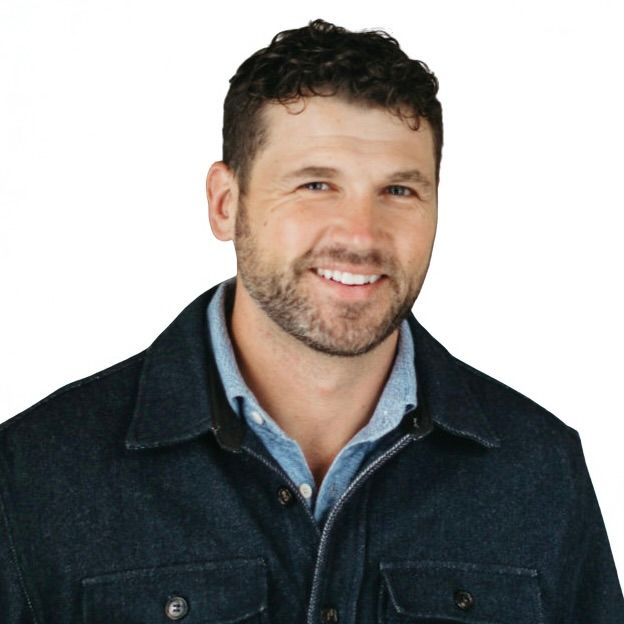
Barry Stoffel
Gardner Builders, Global Vision and Strategy Integrator
As Gardner Builders’ Global Vision and Strategy Integrator, Barry Stoffel drives the evolution of the organization’s vision and mission through strategies that elevate culture, people, and brand. With a background in construction management and years of leading successful projects, Barry brings a deep appreciation for teamwork, alignment, and excellence. He now focuses on long-term strategic growth, leadership development, and expanding Gardner’s global influence through thoughtful relationships and visionary leadership.
[00:00:13] David Tibbetts: Welcome, everybody, to this episode of Beyond Prequalification. I am really happy to be joined by Barry Stoffel from Gardner Builders today. Barry, how are you doing?
[00:00:24] Barry Stoffel: Doing awesome. Thank you for asking, David. How are you?
[00:00:27] David Tibbetts: I'm doing well, thanks. So let's dive in. Let's talk about kind of your path to Gardner builders. I know you have this incredible passion for construction. Where did that come from? What was your path to Gardner Builders? Share a little bit with the audience about that.
[00:00:43] Barry Stoffel: Yeah, I'd love to. There's a lot there, but I'll start with kind of my first introduction into construction, but it started with just being so curious as a young kid. And I remember that I was always curious about how things were built. An example is I got a toy, a three-wheeler, that my grandma had purchased, and I got it for Christmas. And I opened it up, and I was so excited, and I drove it around until the battery died. And once the battery died, I started looking at this thing, saying How does this thing even work?" Right?
I remember I was supposed to go to bed, and when I went to bed, I started taking this thing apart, right? Imagine as a 7/ 8-year-old doing that and not knowing where the screws are and not knowing how to even do this in the first place. And so I did that. I took this whole thing apart, and then the next morning, my grandma comes in, she's like What did you do? And she got really mad at me, obviously, right? She just got me this present. She took the time to get it, and here I am just like destroying it, right? She didn't realize that this is coming from a deep place of curiosity and wanting to understand how this thing was built. The vision I had was like I'm gonna put this back together, too. Like that was one example of like probably a hundred things I destroyed. I'm gonna be able to put it back together, and I never was like it's taken a long time to actually learn that skill set.
[00:01:55] Barry Stoffel: But so I grew up in the Bay Area in California, uh me and my mom lived together. But then there was a house that was getting remodeled near us, and I remember going there every day after school and hanging out with these carpenters and just staring at them, wondering how they do what they do. It was just fascinating to me for some reason. And I spent so much time there to the point where I started building relationships with them in a sense. And I have roots from Minnesota, uh, but lived in California, and there was a hockey rink nearby. But growing up in tough financial conditions, I always asked my mom to like buy me skates and buy me roller blades, and buy all these different things. And we just didn't have the ability to do that. And so I remember wanting some hockey sticks for roller hockey and to be able to play at this ice rink, and I couldn't buy them. So when I was there doing skating lessons, I found a bunch of broken hockey sticks in the dumpster, and I grabbed them and I took them, and I brought them back to those carpenters. And I asked them, like Hey, is this something we can fix? And they're like, Sure Barry, of course, like we'll figure this out.
And so they cut it, and they pinned it, and they put epoxy around it. And next thing I knew uh a day later, I had like three or four hockey sticks that I could use. And so that, to me, it was such inspiration of like, well, you might not have the means for something, but you might be able to figure it out. And that's when that kind of list like seared into me. It was like, well, I can't afford this, but I bet you I can do something about it, right? Like, well, I can fix this stuff, I can do something, and you do it with your hands. And I love the ability. That's why I love construction. It is tangible. Another part of the fascination really grew when my mom took me to San Francisco. I remember driving, and I'd never seen a city before like that. As a kid, it's somewhat in awe of what that looked like. It didn't really hit me yet of like how powerful it is, until I got there and I was standing at the sidewalk looking up at almost a hundred-story building. I'm like, wow.
And I think it was like the culmination of curiosity. Having some really kind of call them role models in a sense. These carpenters were willing to take time to build a bond with me and help me, and show me. And then seeing these high rises kind of all crash together at the same time of like wow. I wanna know more about how humans build. So after that, my mom was a single mom and had a lot of troubles throughout her life from schizophrenia, actually. But she had all these books, do-it-yourself books, like a whole series of them. Think of like an encyclopedia of do-it-yourself everything. So after that, seeing that high-rise and just being so curious, I remember I would read through those things. I mean couldn't really read at the time, but they were all pictures, and I would just start to like look at them and like started to take it in. I didn't even know what I was looking at half the time, but just starting to like immerse myself in it, and that just became a passion of mine. So I don't know, I guess it all started with just this fundamental curiosity and this kind of fitful mentality of how the heck do you do this right?
[00:04:55] David Tibbetts: You know, if you're a curious person, you're in the right industry. Right? There are, there's no shortage of things to be curious about, as you know, right? As you kind of grow in that career.
[00:05:05] Barry Stoffel: It is unbelievable. Like every day, I'm learning something new, and I've been in this specific industry for just about 20 years. And I was saying if you're not green and growing, you're ripe and rotting. And so my point to that is like there's so much to learn, right? Not just in construction around the whole world, but even in construction, I will never know everything in every detail as much as I wish I could just download it like in the Matrix. But you know it is, and it is that's fascinating to me.
[00:05:31] David Tibbetts: You can't really stop learning in construction; otherwise, you might end up getting left behind a little bit, right? But yeah, I remember your post, you know, and you mentioned that it was a pretty personal post, right? Talking about being green and growing, talking about kind of embracing or learning to embrace discomfort, and how important that is, to you, not just personally, but professionally, right?
[00:05:52] Barry Stoffel: Yeah, that post specifically was like one of the best leadership strategies, if you will is about getting comfortable being uncomfortable, Right?
And that's not A new thing or a new saying. It almost sounds like a buzz thing at this point, but to actually be able to do that and really immerse yourself in just being like Hey, things are gonna be okay. And that's where change happens, right? The only constant is change, and so if you want things to change and or just adapt to it, you have to just be comfortable with the gray and the unknown because nothing we do is like totally planned out. So learning the skillset of being comfortable with being uncomfortable is a really valuable one for all people, I believe.
[00:06:36] David Tibbetts: I'm a safety professional by trade. I've been out in the field. Now I work for a tech company, a software company, but I never thought I would be hosting a podcast.
I'm not the most extroverted person. So, you know, when I kind of read your post and I thought about that whole mantra of green and growing, like, look, it, this is a challenge for me, embracing it and, you know, trying to learn to do it better every time.
[00:06:59] Barry Stoffel: Yeah, it's it is hard, right? I get that. Reminds me of one of the things, uh, I had a year off in between, where I was at a different firm and where I am now. And during that year, I went through this kinda one-year program, and this program’s called Studio E at the time. Studio entrepreneur. And they're like I want you to work on a project and I didn't know what project I was gonna work on. It took me so long to figure that out, but then it dawned on me like what's what I'm passionate about. And So what I what we did is we started to have this idea, I was gonna go talk to people in hospice and see what has changed for them now that they know most likely that their life is, you know, has a timeline to it. And really understand their viewpoints. We interviewed about seven people in full documentary style, and I just asked questions and asked questions. And what was amazing was just the amount of gratitude that these folks had for the relationships that they had and where they wanted to spend their time. I remember Sean. Sean was actually a friend of mine. But we interviewed him and his dad, and the different dynamics of what they were going through at the time. For Sean, one of the things that sticks out and he's like, once I went through some of the stages of grieving it's like I saw the world through new eyes. And it was all about human connection and just being there with people and being present, Right? And that was just such an amazing moment to be able to experience with Sean as he's telling his kid this at the same time. It crystallized for me what is important, right? And how do we pay attention to that? So tying that all back together about having fear and not wanting to do public speaking and getting comfortable being uncomfortable is a big part of that, right? It's uncomfortable being vulnerable sometimes.
[00:08:46] David Tibbetts: Barry, I appreciate that. You know, there are challenges that we face every day in our lives, right? And you can tend to kind of focus on those things, but there's also just so much to be grateful for, and relationships are certainly at the top of that list, probably. Right? And, this will help us transition into, I think, who Gardner is, and sort of Gardner's mindset, your mindset. But I just wanted to kind of thank you. I think that was a really cool, powerful message that you just shared. And I like the way that you shared it.
[00:09:14] David Tibbetts: So, you know, Gardner Builders, how does all of the things that you just talked about kind of bleed into who Gardner Builders is, what you're trying to achieve, what your kind of core values are, but first kind of just the basics.
Who is Gardner? Where do you guys do work? What kind of work do you do? What sets Gardner apart? Let's talk a bit about that.
[00:09:37] Barry Stoffel: Yeah, um, our why really is to create a business and have a place where people feel valued for who they are. Challenge in the work that they do. And a place where they love to come to work, right? That's our North Star as an organization, and that's really important to us. And we say that because, for us, as a company, we know that we don't have robots doing work. We have humans.
I remember the first eight years of my career, I was at a different company. And it was all about production, and it was all about, you know, making money. And it didn't matter about the relationships, right? And those things I just said are important to a business, but they're not the most important. And where I was and what I learned at the time was those are the most important things. I knew that there was some sort of disconnect cause I never felt at peace with myself.
And so when I came to Gardner's 10 years ago, um, and that's a great story about Bob Gardner and why he founded the company in the first place. He also worked at other companies similar to what I just explained, and he was coming home every day, just not being able to give the energy to his family and his kids the way that he felt that they deserved. And a lot of that was caused by the drain of the construction industry, the grind that we go through. And so Bob just kind of said, Enough is enough, right? I'm gonna start my own company, and with a vision of it's gonna be different. We're going to find a different way to do things. And it's gonna be about people. It's gonna be about relationships. It's gonna be about trust.
And so that just really spoke to me when I started meeting with Bob, and like spoke to the other side of my heart, and that's where something kind of became a little bit more whole in that sense of a different way to be an entrepreneur. A different way to run a business. And so again at Gardner, our North Star is to create a place where people feel valued for who they are, challenged in their work they do. When I say challenge in the work that we do, that's that growth moment, right? It's uncomfortable, and you're being challenged and you're being pushed. So, uh, we look at challenge in a positive way. It's moments of like where you're you're starting to grow.
I look at it, too, as a formula. If you have an organization, and I don't even care if it's in construction, right? It's bigger than that. If we can get other companies to see that, too. Where we value our team members right? For who they are. We challenge them in the work that they do, so they're green and growing. That plus that is gonna equal, he kinda loves to come to work. And not every day's perfect, right? But that's what we strive for.
And so when I joined Gardner, uh, Bob had built it from nothing. And we've grown the company, and it grew from 25 million to 50 million to 75 to 140 to 225 to 240 and up and up and up. And today we have 225 team members. We've got three physical culture hubs. And then we have what we call GBUS. So, Gardner Builders US and I hold the license in about 42 states. So, for certain clients that are within our psychographic, which is like clients that appreciate what we do as a craft, that want to be informed along the way, that see the value that we bring, and are willing to pay for it. Uh, we'll travel with them around the country. And so we have a few key clients that we get to do that with.
Um, so anyways, that's where we're at today. About 225 people, just shy of 400 million in construction put in place. We are across seven different market focuses. We have a service group that we've built to service smaller projects. Think kind of commercial handyman, but they do amazing work and they can fix about anything. We do tenant improvement office work. We do industrial tip-up construction. Healthcare, higher education, life sciences. We're doing mission-critical and data centers, and also a lot of historic building repositioning.
[00:13:25] David Tibbetts: Is that mission-critical data centers, Barry, is that newer for you all in terms of kind of grand scheme of, of where you guys have lived generally?
[00:13:33] Barry Stoffel: Yeah, I mean. So there's an opportunity, we saw like, Hey, this is something that's growing. I wonder if we can get into it.
I get a call from one of our service techs, his name’s Doug, and Doug called me. He's like Barry, you should come look at this project/ I don't think it's a service job.
Start talking to this guy named Jim, and Jim's like, We wanna replace four cooling towers. We wanna add two new cooling towers. We're gonna add 8 new generators. We're gonna replace some old ones. Basically, they're upgrading their data centers to liquid-cooled machines. And I can't share a lot about the group that's doing this. But the point is, we got into data center work and now it's approximately a hundred million dollar contract, uh, through phase one and phase two, and they're probably gonna add a phase three, uh, which will be another 50 to 70 million from our service group and our service team.
And so we got into data centers wanting to get into the, um, but because of our service team and being there for you know three to four years of just creating great work and delivering with hospitality for them, we got the call. And we got the bigger data center work. And since then, we've been awarded two other ground-up data centers in the seven-county metro, if you will, the Twin Cities. One's under construction right now, and that's about a $30 million one megawatt center, and the other one will be a five megawatt center in South Metro. And so that's how we got into data centers, and it's being nimble. It's being willing to be uncomfortable for a little bit and figure it out. We believe like the processes that you bring to construction, it might be a different product, but the process doesn't need to change.
[00:15:00] David Tibbetts: I think that's important. 'Cause what I was gonna ask you about was, you know, look, like everybody knows that data centers are booming. There's a lot of work out there to be won. But data centers, maybe they're a little bit different than kind of, you know, just general commercial construction, right? Working in an active hospital is a little different than working in multifamily residential. Right? So what you just said is important. I think like you've got really well-defined, sophisticated processes in place, but you know, maybe some lessons learned or some things that you think about.
You want to make sure you kind of, for lack of a better term, you take a leap into that next market segment or that next industry. But you do it in a thoughtful way. Right? So what are some of the things you think about from a, the perspective of, hey, you know, yes, we are expanding into data centers. We need to make sure we have the right teams.
We need to make sure we understand the nuances. We just, Highwire, you know, me and some of my colleagues, we just came from a conference that Skanwear hosted all about electrical safety and operational reliability in data centers, and the big theme, right? Maybe the biggest challenge, not so much associated with the actual construction itself, but as you know, the schedule demands in that industry.
I mean, not that others don't have some pretty serious schedule demands, but that's probably one of the things that makes the work most complicated is the schedule demand. So, uh, this is a long-winded way of asking you, how do you think about it when you do want to maybe diversify and start to do work in a, in a, a newer kind of segment for your company?
[00:16:37] Barry Stoffel: That's a really good question. I mean, part of it is, at Gardner, we believe it's important to grow as an organization, and we believe it's important to grow is because it creates room for others to elevate and to learn and become leaders in different ways. If you kind of get stuck at a certain size, then I'm in somebody's way or someone else's in some way's way. And Humans, I think, at their core do want to grow. They do want to elevate. They do wanna learn more. They wanna continuously improve, right? The green and growing concept. I think that's wired in a lot of us.
I think what's important to take away from what I'm saying is we believe in it very much, so that you know, with our North Star of creating a place where people feel valued, challenged, and love to work. And also, we run on a business operating system. It's known as EOS, Entrepreneurial Operating System. We're also known as Traction. And we had created a 10-year target. And the 10-year target was to become the platinum standard in the construction industry by which all others are measured. Which is a big, vague statement.
And the reason we say that it's like if you're the one setting the bar in the new platinum standard, people will emulate, and then what you thought was a new standard becomes the status quo. And that's a really good thing. We want to make the industry better for our people because construction is a laggard in many things, and adopting technology and adopting new protocols, new processes, just in general of innovation as a whole is pretty slow.
And so for us to create and set the platinum standard and and and change the industry. We also believe the more people that can do this, and the bigger stage we can be and the more people will get enrolled into what we're doing and how we're doing it. And hopefully, that catches on, and more people who hear about it are like Oh, Gardner's doing this unique thing. I wanna adopt that, so like that's how we look at different market sectors. Like, where's the market going? What are the things that are there? Where do we think we can add value, because of our approach to construction and how we do things? We do things differently. One of the purposes is so that we can grow and we can have our voice heard louder, right? Imagine if some of the biggest companies in the world were saying the same thing that we were. Not just saying it but believing it and doing it. The construction industry would be in a better place already.
[00:19:05] David Tibbetts: Yeah, I think it's a great thing, right? Like in the end, you want to continue to make Gardner a better company, continuously improve, but that message and that whole idea that if others take some things away from what they hear from you guys or what they see you doing. The whole industry becomes better. It's good for everybody, right?
[00:19:26] Barry Stoffel: Yeah. So, one of the things that we started doing in our industrial work. You know some of these buildings have 30- 40 foot precast panel walls. And once those are starting to get erected, uh, around the majority of the building, structural steel roofing, steel trusses, start to go up, and then roofing membrane, et cetera, so forth and so on. And the way that our trade partners' people access that roof is on a 40-foot extension ladder.
Imagine 30 to 40 people a day going up and down one of those on a daily basis several times a day. It's not super safe, it's scary, and it's something people don't wanna be doing, but they have to in order to get their job done. What we started doing was erecting a kind of scaffolding stair tower. We started paying for it out of our own pocket to start, so that they actually have a walking ladder platform to get up to the roof, right?
We started putting these on our industrial projects, and it's caught on, and our trade partners value that so much that now they're pushing back on other general contractors to say Hey, this is an important safety measure. This is important to our people. We need you to invest in this, right? And so that is an example of one of Many things that we're doing to change the industry, specifically as it relates to safety.
And that's a big deal. And so the more we get to share that story, the more other people might say You know what, that is important. It's worth a couple of thousand dollars to invest in something like that for people, I'll call them mental health, too. You imagine every day, maybe you know you're a worker that's going up there, and you just got married, or you know you gotta get home, you're taking care of your parents, or you've got kids to take care of. That's a fear. We don't often pay attention to like even that small thing can affect people.
[00:21:19] David Tibbetts: Right. It's a small thing, but you know, it's, I would think, powerful and much appreciated by your partners, right? What we're talking about is caring about people, and that's just one example. Like you said, you know, you know it, I know it and I'm glad you used an example of ladders because as a safety professional, it's, it's always my go-to because everybody knows what it means to climb a ladder and you know what it feels like when you get to a certain height or know what it feels like when you step on that top step of a step ladder. You know the one that says, This is not a step. Do not stand here. You know what it feels like the moment you step on it, and let alone if you stepped on the very top.
You're climbing a 40-foot extension ladder. And then, getting on and off of that ladder, getting off of it at the roof level, but then getting back on it to come back down. Right. It's not necessarily a small thing that you guys did because there is a pretty significant, you know, in the grand scheme of things, there is a dollar investment there to building stair towers and maintaining stair towers. Right?
[00:22:20] David Tibbetts: But you've shown the employees, the workers, that you care, you've made it safer for them to get on and off the roof. You've made it more efficient. That goes a long way. Right? And one of the things that you've said to us in the past is that safety is empathy. And that's just one way of showing it.
And, I know there are many more that you guys have.
[00:22:39] Barry Stoffel: Yeah, that's kinda my saying, if you will like safety is empathy, right? It is empathy for those particular people doing the work, but it goes beyond that. It's empathy for their loved ones and who they're going home to, right? Whether it be their parents or whether it be their kids, or whether it be their brothers and sisters. Whether it be their dog, right? It is empathy for them just as much as it is for the actual craft workers themselves.
[00:23:06] David Tibbetts: Sure. You know, something you said about maybe what your mindset was earlier in your career, or the kind of approach that maybe some of the companies you worked for previously, and this is not uncommon in the industry of like productivity, get the job done, meet the schedule, your mindset has changed. Right?
I want to kind of lean into the overall philosophy around partnerships and relationships, but I wanna look specifically at trade partners. Right. How has, um, your mindset evolving over the years changed the way that you think about what maybe you used to call subcontractors? Now, you speak to them as trade partners.
How has your approach to interacting with, engaging with, um, trade partners evolved over the course of that same timeframe that we were talking about before?
[00:23:58] Barry Stoffel: First, coming into this industry as a general contractor and a project manager, you looked at subcontractors as a means to an end. As a tool, right? And previous teachings were to use that tool, pound on that tool, and make sure that the shit gets done. You know, get it done within the number you gave me originally, I don't wanna hear about change or blah blah blah blah blah. Safety that's your problem. People, that's your problem. Everything's your problem. And that's just a shitty way to do business. It's a shitty way to treat people.
So when I talk about the evolution and being tremendous change, it's like words matter. It's how we communicate. So if I say the word subcontractor, you might not think much of it. But subconsciously or consciously, I'm telling you they're below us. I'm telling you that whether I realize it, whether you realize that you're below me, cause you're sub me sub us, and they're not, right?
As a general contractor, our trade partners are putting in, on average, like 80 to 85 percent of the actual work in place. There are partners in doing this. They need to be treated as a partner. They need to be treated as humans. Once you see that and you understand that the jobs get more efficient, the relationships get so much brighter. Safety becomes something that everyone cares about, not just checking a box. And it becomes a mini culture on the sites, on the bigger projects for sure, and to us, trade partners, you know, without them we can't do our work.
[00:25:31] David Tibbetts: How could you be successful if they're not successful?
[00:25:35] Barry Stoffel: Yeah, you could be that other type of GC that I talked about before, but it's a flash in the pan. You'll get one or two good jobs out of them, and that's it. We plan on doing more than one to two projects. And you want people to be excited. You want them to feel the passion that we have and the care that we have on every single project, and then they care about it. If they feel valued, right? They're gonna show up in that way, and the quality work gets better.
And so yeah, we don't use the term subcontractor at Gardner Builders, it's trade partners, because words do matter and they are our partners.
[00:26:07] David Tibbetts: Yeah, absolutely. I'll give a super quick story. You know, I was on the owner side, uh, the last time I was out in the field as a safety professional, um, at an Institute of Higher Education. And, um, I always had the mindset that. You know, we were a team, right? Uh, general contractors, trade contractors working on campus.
The idea was that we deliver these projects safely, successfully. Workers are safe, the public is safe, our buildings are safe, all that, you know. There was a, there was a day, when there was a fire in one of the mechanical spaces that was a direct result of hot work that was going on, right? And there was a hot work permit that was completed.
All the boxes were checked. Yep. We have an extinguisher, we have a fire watch. We inspected the area to make sure there was no flammable and combustible materials, so the paper was completed right from that perspective. But then they started welding, and they were welding within 18 inches of insulation that was on the walls, that was flammable.
And it caught fire. And it was dicey, right? It was borderline, like they were able to get it under control, but it was like seconds from becoming disastrous. Right? And so, as the safety person for the owner, we called that project team into a meeting, right? And so we could have approached that meeting in one of two ways.
We could have went in there, you know, stomping our feet, yelling, What's wrong with you guys? What are you doing? But I never had that approach. I went in there, and we talked about it from a learning perspective. They obviously knew that they messed up, right? They made a mistake, and they understood it.
So we went in there and we talked, this is a, it's a post-incident review meeting with the purpose of identifying what happened and how do we do better next time. Um, and so that was the tone and tenor of the meeting. And I remember afterwards, uh, their foreman. You know, he came up to me and he was like, you know, I was really nervous going into this meeting, but I really appreciate the way you approached that meeting.
And so it's just little things like that, right? Um, but there are owners out there, there are GCs out there who, who, who, who haven't enrolled in that mindset yet, but I think it's an important one.
[00:28:09] Barry Stoffel: Yeah, well, think about that, right? I mean, do we learn when we're super stressed out or in fear? We shut down.
So as a leader and as a safety professional, having those conversations, if you come out of the gates just like placing blame and yelling and screaming, like you said like people shut down and they're not even listening anymore. They're not hearing it, right?
It sounds like you led that in a really Intentional way to create an environment where people made a mistake. And we're humans. We're all every single one of us make mistakes probably every single day on something.
And it's one being able to say being humble enough, which is one of our core values, to raise your hand and say, I did make a mistake. I'm ready to learn from that. And here's how I'm gonna do it differently, right? And it’s upon the leaders and our sage professionals and everyone in the organizations to be able to create a safe place for people to learn. And the second you come outta the gates with this hot, you know, it doesn't create that environment.
[00:29:04] David Tibbetts: Thanks, Barry. And I think what's clear to me is that Gardner lives that breathes that every day. You know, a couple of takeaways from looking at Gardner Builder's website and listening to you talk about it.
You know, the things I see on there throughout, you know, um, strong partnerships make complex projects possible. Partnership and hospitality are at the heart of complex project delivery. It shines through in the conversation that those are not just things that you guys say, but those are things that you live by.
So I really appreciate that about Gardner Builders and about you, Barry, and for you sharing that message today.
[00:29:38] Barry Stoffel: Yeah, thank you. I'm just full of gratitude and appreciation um to be able to share a little bit about who we are and what we do and how we show up every day. And really appreciate you for taking the time to talk with me and let me share a little bit about us.
[00:29:55] David Tibbetts: Absolutely. And I know when we talked before, one of the things you said, I think, I think you said it when we were talking about how you, when you were a kid, and you were standing there looking up at that skyscraper, and you said, really, the things that we build in this industry are mind-blowing.
You know, when you see it from the street, you don't really understand everything that goes into it from conceptual design through planning, coordination, collaboration, scheduling. It's just incredible.
[00:30:23] Barry Stoffel: It's mind-blowing. You're right, I did say that the first time when we chatted. And I still feel that way. I look at the projects we do, and I'm like, How did we do that?
When you said that like think about all the pre-planning that goes into like. Even from the design side, and how much time and effort they're putting into it. And then you're gonna add your consultants, and whether it's civil or MEP or you name it goes on and on. And then we're getting rolled into it, and then we bring all of our trade partners into it. And then there's another, you know, 15 different outside vendors that might, you know, security and audio video, and the list goes on and on and on. The folks that are taking over the building are needing to pay attention to a contract. And there are thousands of people sometimes on these projects.
[00:31:06] David Tibbetts: You know, I hope that if there are any folks out there or you have, you know, children that are kind of high school age thinking about where they're heading, I hope that folks, you know, the folks that do listen to this, maybe you have some others listen to it.
'Cause the passion that comes through from Barry, and just how incredible it is to think about the things that are being built. There's a lot of pride that comes along with being in this industry, and there are so many different types of jobs and opportunities. So when we hear about the skilled labor shortage, you know, the shortage of construction professionals. There's so many opportunities, and I hope that when people listen to podcasts like this, they may start to get excited about it, and maybe they'll consider a career in construction.
[00:31:47] Barry Stoffel: I love that I gotta double click on that. One, if you like construction, it is a phenomenal industry to be in for so many different reasons, including one of career stability. And having a wonderful career that pays really well. And here's a theory that I have: as AI continues to grow, people are less and less interested in this type of work, which does sadden me. Uh, it creates a lot of opportunity. What we do isn't going away for a very, very, very, very, very long time. Yes, we have some robots that do some little things in construction, but all the research I've paid attention to, we're a long ways away before any type of AI robot can come into an existing building and ride up the freight elevators and bring up the materials and erect the steel and the studs and et cetera, so forth and so on. And so you know, that's one thing to consider too, is having a career. Like people always are gonna need to eat, people always are gonna need healthcare, people always are gonna need construction.
[00:32:51] David Tibbetts: Absolutely. I think that's a really great final message that we shared. I'm glad we shared that in the last couple of minutes here. So, you know, takeaways for me are the importance of partnerships, the importance of relationships, the importance of caring for people, not just your own people, but you know, trade partners, employees, their families. When we do care in that way, and we do, you know, strive to kind of continue to grow, we can make this industry better, we can make it safer, and we can do some amazing things. So, really appreciate it, Barry. Hopefully, we get to talk again and, uh, enjoy your week. Thanks for joining me.
[00:33:29] Barry Stoffel: Stay green and growing, David. Appreciate you very much and see the human in the work that we do.