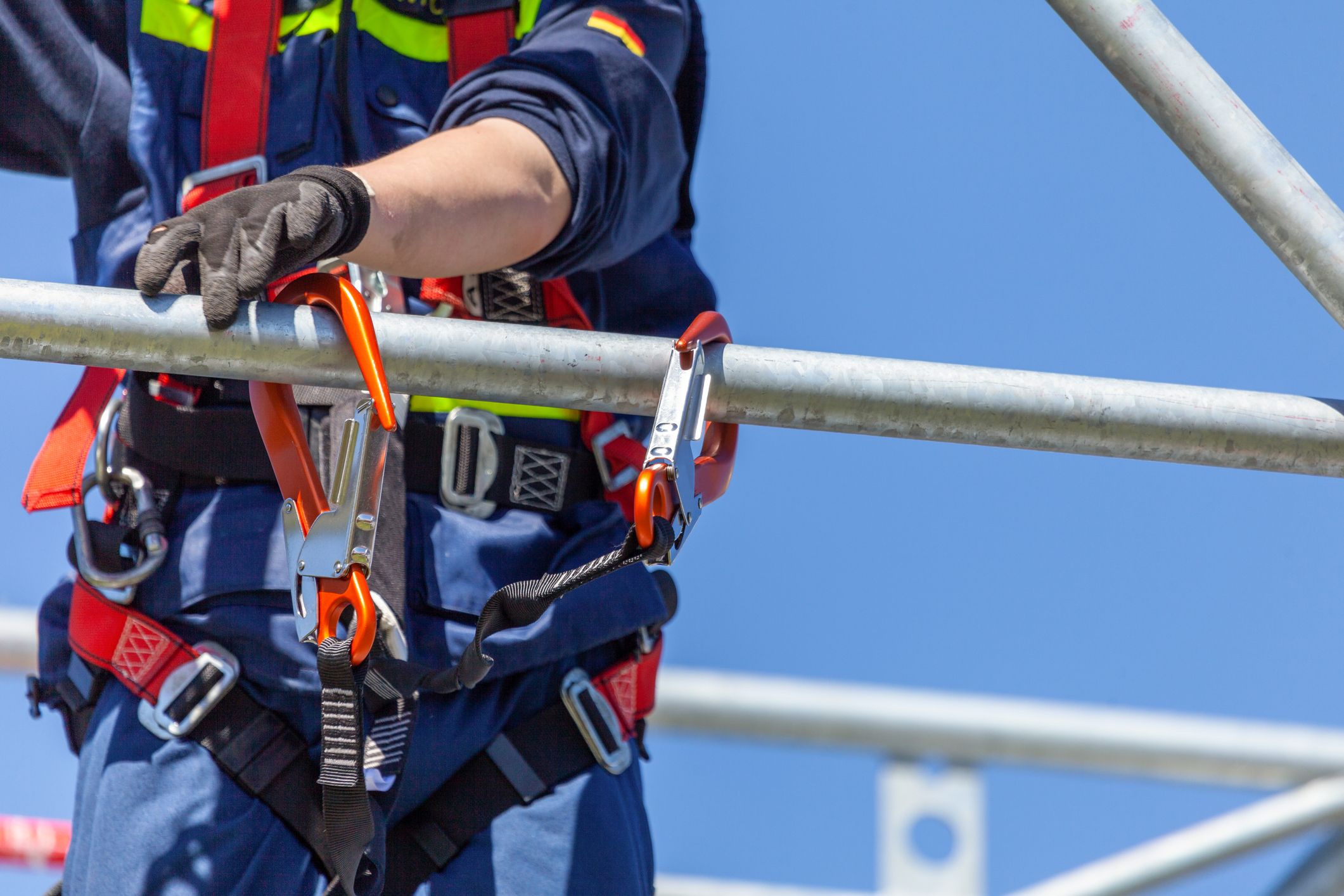
Engaging Leadership to Prevent Falls in 2025
Join Highwire’s Chief Safety Officer, David Tibbetts, as he speaks with Jason Edic, VP of Risk Management at Lee Kennedy, and Ryan Rohleder, Director of EHS at Fortis Construction. Together, they explore why falls remain the leading cause of fatalities in construction and what it takes to change that.
You’ll hear honest stories from the field, strategies for spotting and addressing fall risks, and insights on building a culture that empowers teams, drives accountability, and challenges complacency.
Whether you're a safety professional, contractor, or executive, this episode offers practical takeaways for eliminating fall risks and making safety a non-negotiable.
Meet the Guests
Jason Edic
Lee Kennedy Co., Vice President of Risk Management
Jason Edic is the Vice President of Risk Management at Lee Kennedy Co., Inc, a full service construction firm servicing several industries. Jason is an experienced EHS leader with a long history of construction safety and risk management.

Ryan Rohleder, MS, CSP
Fortis Construction, Inc., Director of Environmental, Health, and Safety
Ryan Rohleder is the Director of Environmental, Health, and Safety at Fortis Construction, where he leads EHS for complex projects across the US. His background includes global roles at Intel and Google, and he is committed to creating incident-free environments in high-risk industries.
Related Resources
Transcript
[00:00:56] Dave: Welcome everybody to today's program. Today we're going to be talking about fatal falls and construction, but not just fatal falls, also just fall exposures. Before we dive in, I want to give my guests an opportunity to introduce themselves. Ryan Rohleder with Fortis Construction, and Jason Edic from Lee Kennedy.
Jason, why don't you kick us off with an introduction?
[00:01:19] Jason: I'm Jason Edic with Lee Kennedy Company. We're a mid-sized general contractor in the New England area. I've been in the business for almost 30 years now. My entire career has been spent as a safety professional, and the majority of it in construction.
So, I'm excited to be here today.
[00:01:37] Dave: So if you've been in the business almost 30 years, that means you and I have been working together for 23 or four, something like that.
Ryan and I have been working together for probably eight years or so. Ryan, why don't you introduce yourself? Talk a little bit about your current role.
[00:01:53] Ryan: My name is Ryan Rohleder. I am the Director of Environmental Health and Safety for Fortis Construction.
We're headquartered in Portland, Oregon. We do construction projects throughout the U. S. and in Singapore, and have done some projects in the past in Europe as well. I'm delighted to be here today as an in user of the Highwire product.
I've done multiple roles as an owner, builder across the globe. And then also as a subcontractor as well. So I know what it's like to be on both ends of the spectrum there. And I'm very excited. And this is a topic we need to talk about more.
And we need to get it to zero.
[00:02:28] Dave: Great. Appreciate those introductions. What I really like about the group we've put together here, and Ryan just spoke to it a little bit, is we've all sat at the table looking at this challenge from many different viewpoints.
We've been on the owner side. We've worked for general contractors. Ryan has some experience working for a large specialty trade contractor. So, we have experiences from all those different viewpoints to share. We're going to be very open and honest about this discussion because that's what it requires when we're talking about falls in the construction industry.
We're going to share our experiences and our perspectives, that includes some of our successes. But also some of the challenges in the industry at large. And as Jason and Ryan both mentioned, the bottom line is that we have to do better. And it takes everyone that is involved.
So Jason, I'm going to ask you a question. If you were to ask any worker, a carpenter, a laborer, a roofer, a painter, doesn't matter what trade, what is the leading cause of fatalities in construction?
What would they say?
[00:03:32] Jason: I'd say falls, but without hesitation, they'd say falls.
[00:03:35] Dave: How long would it take them to answer that question?
[00:03:37] Jason: About as long as it took me.
[00:03:39] Dave: Yeah. They wouldn't even have to think about it. And Ryan, if you think about all of the different organizations you've worked for, if you were to ask leadership at any of those organizations, that same question, what would they answer?
And how long would it take them to answer that question?
[00:03:55] Ryan: It would be that fast. It's so highly talked about. You see it in articles of unfortunate incidents. You hear about near misses as well. It's falls, and they're going to say it every time.
[00:04:05] Dave: If you were to ask those groups, what's the most frequently cited OSHA standard each year, what would they say?
[00:04:12] Jason: It might take a little bit longer to answer this one. You'd see their eyes roll up and go falls, obviously.
[00:04:18] Dave: Yeah. So the point in just having that brief discussion is to say that.
Everybody in the industry understands this, right? We know that year after year after year, falls are the leading cause of fatalities in construction. And if we're honest, we really haven't been able to make a meaningful impact as it relates to the number of fall-related fatalities in the last 10 years.
They've even increased. We're also going to talk about exposures today and how those factor in. First, I want to get some initial thoughts from both of you on what's going on in your organizations. What conversations have you had with your peers? Jason, tell us a little bit about what's happening in your organization as it relates to falls, how you're approaching it.
What are some of the challenges that you might be having?
[00:05:06] Jason: I've been at Lee Kennedy for 13 years, and we've been measuring observations for 13 years. We have a solid program in place. From executive management on down, if we observe a fall exposure in the field, we add that to the Highwire platform in an observation, and an IDLH alert goes out to everybody on the project and every single one of our executive leadership team.
We communicate that to the subcontractor, to the project team, and it's always communicated as, Hey folks, this was a good catch. This it's spun as, Hey, this is a good thing. We prevented a fall, and we feel like when we portray it as positive, we're encouraging people to keep pushing and pursuing the idea of fall exposures.
But if I'm honest, if you look at our statistics, just like the industry, just like OSHA, fall exposures, we have completely plateaued for the last several years. We made a good initial impact several years ago, when we really started to push this. We've absolutely plateaued. We're seeing the same percentage of fall exposures today as we were five years ago.
As hard as we push, we've got to find another way to move this needle.
[00:06:19] Dave: Thank you for sharing that. And the point there is that even with a high level of attention, when those exposures do occur, attention from your own company, collaborating and talking with your trade contractors, the impact still hasn't been what you want it to be.
Ryan, from your perspective, what are you seeing? What are some of the conversations that you've been having recently?
[00:06:42] Ryan: Yeah, absolutely. So we're doing very similar things to what Jason is saying.
Recently, I was together with a bunch of safety professionals, and we were talking about this topic. And one of my colleagues said we don't have falls. What do you mean you don't have falls?
He's no, it's, yeah, you guys are really worried about that, but we don't have that here. And I said, But what are you talking about you don't have falls? You just, not recently? He's yeah, just we have, yeah, we haven't had them recently. And I just start, a lot of us say professionals all look at them and say What are your observations telling you out in the field?
And he paused for a moment, he thought about it, you could see it in his eyes. Even I am getting complacent. You could see it, right? And he flipped the script, and he was like, you could just see it right then and there, we need to do a better job of looking at observations in the field, looking at behaviors, engaging our field craft.
And we were all promoting him to do these things. But that kind of mindset creeps in. We haven't had a fall in a while. We haven't seen at at-risk behaviors. Are we just not looking for it? Are we not engaging it?
Are we not promoting a reporting culture? Just because something hasn't happened doesn't mean it doesn't have the potential to.
Look at your data. Put a focus on it. Do a pattern interrupt out in the field, say, Hey, are we looking at exposures? Or are we looking at the schedule of our project, saying, What risk do we have upcoming? And are we planned for them? So it was just a recent conversation, we were all, we weren't pouncing on them, attacking them, but we were just like, Hey, look, you're falling into the trap.
Stop. No pun intended.
[00:08:11] Dave: I think there's an important point there, which is that is a dangerous mindset that you can fall into. We don't have falls. We haven't had a fall, right? Most companies can say that. We haven't had a significant fall. We haven't had a fall-related fatality, but that can lead to complacency.
You have to look at what's happening out on your job sites. Where are our exposures occurring? Because believe me, you're having exposures, right? Every project is having exposures. You need to identify them. You need to talk about them, investigate them, learn from them.
And, we're going to get into this a bit later, but you might need a different mindset around those exposures. Not going to spoil it because that's going to be a major point of discussion here, but we're going to move on to the next question, which is. If you think about the industry, how the industry has evolving, some of the recent challenges, why do you think that there has been even an increase in falls in the last 10 years in the industry, despite our ongoing efforts? What are some of the challenges that we're facing today? And Ryan, we'll start with you.
[00:09:12] Ryan: We talked about this beforehand. I can't pinpoint one specific reason or one specific behavior that we've seen on our projects. I just think there's a culmination of just more workload and more risk, and newer people getting into the trades. Also, we're asking our frontline leaders to do more and more. What we have seen, and you know what I've seen in the past couple years, as well as owners, subcontractors, subcontracting partners, vendors. All of these folks that are involved in your projects more and more is being asked of our frontline leaders to either integrate those folks or produce micro schedules or more.
Clients want predictability with scheduling and projects. There's a lot of more administrative work, and what we're really trying to do here is trying to get our field leaders in the field and out of the trailers or out of the office.
Engaging out in the field, frontline leadership, actively in the field, and not sitting in the office, and really trying to do that balance between field responsibility and accountability, and the administrative side that our frontline leaders have to do.
[00:10:24] Dave: Yeah, thanks for that, Ryan. And Jason, you share a little bit of a similar sentiment there.
What are you seeing as some of the challenges that your teams are facing? And the industry is facing in this regard?
[00:10:35] Jason: We almost seem to be in the perfect storm, meaning we all know that perpetually schedules on construction projects are condensed. We never have enough time with all the design changes and all the delays.
It schedules are perpetually condensed. We're always up against the clock, which is a form of pressure. Technology's improved dramatically over the last several years. But the time that we spend in the field today versus several years ago, or even a couple of decades ago, to me has decreased dramatically.
The burden that's on our project teams is almost overwhelming. The work for a full-time employee has doubled since 2016, doubled. So we're putting in place twice as much work per full-time employee as we did eight years ago, and we're watching that burden increase even beyond that.
So it's the meetings, the focus on the field. If that's happening to general contractors, you know that that same thing is happening to the trade partners, the people who put in place 95 percent of the work on the projects. We don't see the manpower we used to see guiding that.
That's one of the biggest challenges that we have. Ryan also touched on, we've got a younger workforce coming into this industry. Whether or not they're getting the same level of training or those expectations are being set like they were 10 or 15 years ago, is unknown. Our stats, have plateaued, but our fall exposures are still there. We are making zero headway with fall exposures.
[00:12:06] Dave: I heard a couple of key things there that I think we should just drilling on a little bit more. And the first is schedules. Schedules have become just increasingly aggressive, whether that's because of the technology that's facilitating that, or just the demand to try to get these projects done quicker.
If I equated that to schedules, we're trying to stuff two years' worth of work into 18 months. Sometimes more aggressive than that.
In some cases, we are resource-constrained. And we have a shortage of skilled labor, that's being a challenge in the industry. Even not just skilled labor, but skilled field supervision, superintendents, project managers, field engineers. If we're losing, in some ways those skilled professionals that contributes as well. If those resources that we do have are constrained in how much they can be out in the field, collaborating, observing, planning. That's a major challenge as well. I think as safety professionals, we would love to slow projects down, but is that realistic?
So we've got to emphasize planning, coordination, execution has to be higher, right? And as it relates to fall protection and fall exposures, specifically, we have got to continue to place an emphasis, even a higher level of emphasis.
These challenges, of course, right? They don't provide any type of excuse for failures as it relates to workplace safety or prevention of falls. What are some of the organizational failures that can lead to these exposures?
Where do you think we need to go from here? Jason, can you share your thoughts to kick us off here?
[00:13:47] Jason: Yeah, to me, it's a perception thing. So I think most general contractors, at least the ones that are sophisticated enough to realize that they have a responsibility towards us. They realize that we look at fall exposures fairly standardized, meaning it's a non-negotiable. We cannot accept fall exposures. But when it comes to our trade partners, I haven't felt for a long time like they have that same line in the sand. I would love for this industry to start to look at fall exposures like we're starting to look at some other things in society.
If you think about sexual harassment or age harassment. A racist slur on a job site is a non-starter. It is unacceptable. When we see it, there is an end that's put to it. But we don't look at fall exposure the same way. And I think that's a mistake in our industry.
We need to start to look at fall exposures like it is unacceptable.
[00:14:38] Dave: Yeah, I think that's powerful. We're going to come back to that thought of what unacceptable means, but it's powerful to make that connection between harassment, discrimination, not being inclusive, all of those types of things are recognized as unacceptable.
One of the questions you asked when we were chatting earlier was, Why do we tolerate fall exposures? We'll come back to that. Ryan, you had a really interesting take on this as well, hearkening back to your time in the military. Share your thoughts around this idea also.
[00:15:09] Ryan: Yeah, absolutely. Safety is a mindset. If you allow these behaviors, as Jason talked about, it's unacceptable, and what you permit, you promote. If you permit these behaviors on your project and shrug them off, you're promoting it.
You're promoting that behavior. You're promoting that it's okay here. It was just one off. It's one time. Excuses are lies. We've got to draw that line in the sand and make those behaviors unacceptable on our projects, but also at pre-construction, you need to talk about this with your contracting partners.
This is unacceptable. Safety is a mindset. We're choosing to be safe. We're not going to hang our hat on luck. And we're gonna ensure that on these job sites, the behaviors that we want to see, we're going to promote in a positive light.
We're not going to permit these unacceptable behaviors on our projects.
[00:15:59] Dave: What you permit, you promote. I think that's really powerful. We don't necessarily sit here and think we permit fall exposures. We are going to address those things in the field immediately. But if we stop there, are we still not promoting, but accepting it? If we just continue to address it in the field immediately, the conversation stops there, and we move on about our business.
Are we not accepting that as something that occurs on our job sites? One thing we talk about a lot is how easy it is to point the finger at the worker. Does unacceptable mean that when you see an exposure, you immediately remove the worker from the site?
Is that the default? Does that address the issue in your mind?
[00:16:45] Ryan: Yeah, here I'll go. I've seen these behaviors before in leadership, where that person did something, they're out of here. Well, no, maybe we, as the general contractor, set them up for failure, or maybe the subcontracting partner didn't look at the design lifecycle safety and didn't reduce those risks for that worker. Did someone in the field remove a guard, guardrail, not thinking of the people behind them, as they were tied off, and someone else with no fall protection had no idea, and you just so happened to see it?
It's stopping the behavior to make sure they're safe, have a conversation with them, bring them into the trailers or the office, and understand why this happened. Okay. So I'm not saying going out there and saying that all behaviors is because of the worker. Absolutely not. We have to look at us and how we plan the project, how we did the planning the day of, what our pretest plans or our job hazard assessment set or risk assessment set and method statements, understanding why did this happen? Why did this behavior occur, or why did this condition exist?
[00:17:46] Jason: Yeah, I'll give you a couple of quick anecdotes. The first one is one end of the spectrum, and the second one is the other. Back in my former life, I worked for another general contractor, and we had really zero tolerance for fall exposures and that, we would attempt retraining, and if retraining didn't work, that person was off the project. And we had, and I work on a job that we asked to leave the job because of fall exposure, right?
So we just we blame the worker. This guy doesn't get it. He's got the opportunity to tie off, and didn't tie off. So adios. Stays with that same company and literally goes right across the street to another project for another contractor. Two weeks after we let him go, he falls and is permanently disabled from a two-story fall.
As a safety professional question myself all the time. Could I have done something a little bit more that would have prevented this, or change the culture within that company? And I struggle with it, and I really do. That's one end of the spectrum. We look at a company's culture.
The other end of the spectrum is that we work with subs right now, Gaston Electric. Gaston Electric is a sub who has some lines in the sand, and they exceed Lee Kennedy's expectations on their projects with their own policies and procedures.
They mandate it, and it is a culture like nothing I've ever seen. Every person on that job, young, old, doesn't matter, is abiding by these. And they internally find it unacceptable with certain things. And one of those things is fall protection. Electrical obviously is another, and live electric work and lockout tag out.
That company has a culture that makes an impact. The data backs up that perception. They have very few exposures on our jobs. Thousands of observations.
[00:19:27] Dave: That's excellent.
You're leading us into our next discussion around culture. If I bring it back to the example of the worker who was removed from the site because of that fall exposure, went to the next site, and he fell. He may have been working for an organization whose culture allowed for that. So he goes from job to job.
[00:19:47] Jason: Yeah
[00:19:47] Dave: Where that is maybe viewed as acceptable in the culture. One that doesn't specifically allow that, but also doesn't have that line in the sand where it's drawn as unacceptable. And so it does come back to culture. And so we want to talk about this now, and I know Ryan has great stories to share around this as well. As owners and general contractors, we have the ability to set a certain expectation on our jobs.
But if the company leaders for those trade contractors are not setting that expectation such that it's part of their company's culture, it doesn't matter what the owner and GC say on one project; those workers go to the next project where the owner and GC doesn't share that same level of commitment.
How important is it that company leaders set the expectation, draw that line in the sand, and actually live it? Ryan, you had a powerful story to share when we were talking in advance of this session.
[00:20:50] Ryan: A story that comes to mind as of my former life, I was on the owner's side managing a very large construction project where we had hundreds of iron workers on site.
You know, close to pushing almost a thousand on workers on site. And they got after it every single day, the right way. One of our contracting partners' owner would come out frequently. Okay, and this he's the owner of the company, president, CEO He would come out to the all-hands meetings and pull all his iron workers together as a group. And we're talking 200 plus iron workers, steel connectors, welders, etc., on site.
And he would say, This is unacceptable. If you choose to take a shortcut and not done your fall protection, we are going to tie off at all times over six feet. Here's how we're going to do it. He would put on the fall protection himself. He would say, here's what I expect you to look like professionally. Here's how I expect you to go about your day, doing your pre-test plans and risk assessments.
I expect frontline leaders to check in on you. A couple of years down the road project still ongoing, he says, my time as CEO is done, and he passes this torch to his son, who is now the owner operator of this business. And seeing that perception from his father or the CEO, he continued on with that legacy and then even raised the bar himself.
All new hire orientations from the union hall would go through their company, he would be at it. He would come and do job site visits where he talked about fall protection and having the right mindset, and that here at this company, we will not allow this to happen. And it wasn't just us on our mega project that I was on.
He did this at each one of his job sites, and he had a cadence to checking in. He would stop his frontline supervisors to make sure, Hey, are we planning this job right? Do we have all the drawings tools, material, information, and training for your teams to be successful?
He would go around and check on the workers. Hey, what does your fall protection look like? And one time, he invited me, as the owner, to come with him, and he would go around to inspect the way their fall protection equipment is being stored. He cared that much because in his industry, this is one of the leading cause of fatalities. He would go out and do his observations throughout the day. He would do all-hands meetings and talk about his personal accountability and responsibility for each member on the site working for him, and how they need to have the right safety mindset.
And it's always stuck with me. That contractor got it. They understood. The quality was superb. And we had very few issues. And I'm talking about very minor issues. Their front-line supervisors would say, Hey, I got this. Let me take care of it. And they had that proactive mindset, but it started from the top, and it went top down. But he would also listen to the bottom up and get their feedbacks and strategies on how to be more successful on the next one.
[00:23:48] Dave: That is an incredible story of commitment from a company leader to building a culture that delivers the best safety outcomes and empowers employees to always do the right thing.
[00:24:02] Jason: Yeah. The question here was how important is the commitment from company leadership. It's not important. It's critical.
[00:24:11] Dave: It's everything.
[00:24:12] Jason: It's the only differentiator I see in the field. When you look at it, and you can pick any trade category, it doesn't matter. There are some trades out there, iron workers, concrete, some of those high-risk things, that crush it.
That absolutely crush the concept of this is a time and energy thing. This is where we want you to put your time and energy. This is where leadership puts their time and energy. This is your focal point. This is that line in the sand that does not get crossed at our company. That comes from leadership.
That doesn't come from the ground up. What you permit, you promote. It's a great line. It comes from leadership, especially at the trade level.
[00:24:49] Dave: If there are representative from subcontractors joining this session today from general contractors, from owners, sharing that message with the leaders within your company or the subcontractors that you work with is a powerful message that we need to share.
And maybe you'll share some of those stories that you heard today, because it comes down to, in a lot of ways, day-to-day decisions that workers are going to have to make out in the field. And the culture that you've built is gonna, in some ways, determine what decisions they make. Are there workers that you have truly empowered?
If a worker gets to their work area and they feel unprepared or they encounter a hazard they did not anticipate, what are they going to do? What are they empowered to do in that moment? And that comes from the culture within that organization. Okay, we're gonna shift. I think that was a great discussion.
Thank you guys for your insights there. We're going to shift a little bit. We've talked about the role GCs and trade contractors can play. We're going to talk about the owner's role in reducing fall exposures.
What are some of the best ways that you've seen owners impact fall protection, fall prevention strategies, safety cultures, safety behaviors?
[00:26:02] Jason: Owners play a huge role. I think we all realize this. In construction, we have our bar. When we do work for an owner or in a portion of the construction industry, that sets the bar a little bit higher.
It could be a microchip plant. It could be a semiconductor facility with oil and gas, something like that. We're doing construction on those facilities. Those owners are much more sophisticated, typically have a much higher expectation than, say, a development company who just wants a building turned over so that they can they can turn a profit.
Owner involvement plays a huge role. We rise, in construction, we rise to that challenge when we have those clients that expect more demand more and physically put the energy into demanding more. With all that said, we're at a point where we cannot rely on clients and sophisticated owners to move this needle.
If we're going to move this needle in the industry, it's going to come from ground up. And ground up is general contractors and trade partners. That's how we're going to move this needle. It's not coming from an OSHA regulation. It's not coming from our insurance companies. It's a movement that needs to start with us, with the trades and general contractors.
[00:27:16] Dave: What are your thoughts on that? Do you agree?
[00:27:18] Ryan: Absolutely. We can't rest when it comes to other projects as well. If you're working for those super-involved and engaged sophisticated clients. You can't say, Oh, we're not on that project.
We're just going to be unsafe on this other one. You've got to apply it across the company and have that same drive and mindset. It's got to come from us in the construction world. We can't rely on owners, clients, insurers, or regulations.
We've got to start as a group to be unified on our approach and our mindset. And we've got to come together to reduce these number of falls across our industry.
[00:27:51] Dave: Agreed wholeheartedly.
I want to move forward and talk about how you guys have successfully addressed subcontractors with poor performance. Either on a specific project or where you've identified systematic trends over time. On a project where you've identified a quick emerging trend as it relates to fall exposures, but on a larger scale, a partner that you've worked with for a long time, where you start to observe systematic trends.
What are some of the things that you all have done that have been successful with a spirit and mindset of partnership to help drive improvements within those organizations so that you can continue to have that strong relationship going forward? Ryan, we'll start with you.
[00:28:37] Ryan: Yeah, absolutely.
We could talk about all the tactics of it, but just staying high-level is bringing their company leadership in. And with our leadership, bringing them in and asking How can we help you be successful? It's easy to always have the club beat people over the head, and you will do this or no more work.
Maybe they don't know. Maybe they're a small organization. Maybe they're a multi-tier partner in a geographical area that's the only trades that you have available or the company you have available. And again, I wear my heart on my sleeve and think people want to do good, so we tried to have a culture of let's bring them in and talk to him about, Hey, here's some behaviors.
Here's some trends. Here's where we see your company not showing up. How can we help you be successful? And you talk about it openly. Let your guard down. But you hold that line in the sand. You hold them accountable. You help them grow and progress. Again, it's super easy to bring out the stick or push them aside. You're never going to use them again. It doesn't help the industry. Jason and I work for different contractors. It's not going to help if they use them over there. Let's help these subcontracting partners or even ourselves. If we have a poor-performing project with the same superintendent over and over again.
Hold on, that's a theme. Let's look at ourselves, too, and say, How can we get better? How can we help these people grow? How can we help their company? How can they have a more mature culture?
[00:29:59]Dave: Thanks, Ryan. I think you mentioned something there, which is that you have an opportunity to educate, in some cases, these companies that might not understand how their behaviors are impacting their performance and how the how their lack of culture is impacting the worker.
Let's talk about how we can do better on the next project. Those are the types of conversations that superintendent will take away with them. And when those efforts result in a better outcome, from a safety perspective, which could lead to quality and productivity as well, when the superintendent takes those lessons, they take them to the next job with them. So having some of that data is really important. Jason, talk a little bit about how you use data to drive those discussions with your trade partners.
[00:30:44] Jason: Yeah, there's a carrot and stick approach.
We have a program at Lee Kennedy called the Top 10, Bottom 10. It's more like the Top 30, Bottom 10 now. The idea is to use data. If we all agree leadership in an organization is the key to that culture, and I think that's fairly universal, we took that concept applied it to this top 10, bottom 10, where every year, we take our top 10, now top 30, top safety performance companies.
We invite all of their leadership to a big shin dig. It's a breakfast, we have an award ceremony and, but it's data-driven. You guys are in the top 30, and here's why you're in the top 30. Please keep doing what you're doing. On the flip side of that, and this is where we use the data. We take our bottom 10 performers from a safety performance standpoint, and we invite the ownership into the office for a much more personal meeting.
It's a one-on-one meeting. Each contractor sits with our ownership, with Lee Michael, our operations manager, our SVPs. And we present them with the data. We actually do some work in advance by going to that sub's office and saying, Hey, we're going to call you into the office, and here's the data. I want you to absorb this and come into us.
The basic message is, we love you guys. You're a partner of ours, but the safety performance needs to change. And most of that safety performance is fall exposure-related. So we, and from there it goes one of two ways, either they get it, and the general message is, Hey, if you're sitting down here again next year, it's going to be a different conversation.
And we've actually gone down that route to where we've dismissed a subcontractor from bidding work with us. Another eventual success story because they came back to us a couple of years later and said, We get to meet one more few guys again, and here's what we've done.
[00:32:29] Dave: Awesome.
[00:32:29] Jason: But we've taken ownership and said, here's the data.
We're going to give you more of this data at whatever frequency you want it. And we're going to meet with you. We'll even come in and do some training sessions. We'll do whatever you want to raise the bar. We've actually had contractors go from the bottom 10.
Now, picture that out of 500 trade partners that we work with. From the bottom 10 to the top 10 in a couple of years. That to me is the ultimate. We've taken this company, and they've really taken it to heart and moved themselves into the top 10, like a high performer.
Mostly when it comes to fall exposures, I love those stories because it's, they're at the top 10 breakfast now.
[00:33:05] Dave: I've heard you talk about top 10, bottom 10, quite a few times, that you mentioned something in there that I think was a lesson learned.
By in advance of bringing that contractor in to have that conversation, a step you inserted was, we're going to go to your office, share some of this data with you, so that you can absorb it before you come in and meet with Lee Kennedy's leadership. Why did you insert that step?
[00:33:27] Jason: Nobody wants to be called into a client's office and have a hand grenade lobbed at them.
That's why we do it. The first year we did it, we just called our trade partners in one by one and showed them the data. It was so confrontational. So we said, all right, we can't do this again. So we would take a roadshow and visit the sub's office and just say, Hey, it's going to be an uncomfortable conversation, but we need it to be a productive conversation.
So don't let it become confrontational. That's the reason that we took it. On that roadshow. Full honesty.
[00:33:59] Dave: Yeah. And for those contractors that do get asked to participate in those, this ties back to a corrective action planning webinar that I did not too long ago with David Watts from Skanska, look at those interactions as an opportunity. If you're a trade contractor, look at those interactions as an opportunity to improve, to build, and continue to build your relationship with your general contractor clients. And if you look at it from that perspective, those interactions are going to be much more effective and successful.
It's amazing how fast time flies when you're having a discussion, I think you can see we're all very passionate about. We're going to wrap it up.
I want to thank you both, Ryan and Jason, for the engaging discussion that we had. If I was to talk about some takeaways, some sound bites again, remember what you permit you promote. Think about that. Think about considering fall exposures as unacceptable, just like you would think about harassment in the workplace, a lack of inclusivity in the workplace.
If we begin to think about that, maybe we change the way we approach planning for fall protection, the way we approach fall exposures that we observe in the field.
We think about learning from all of those, engaging with our partners in a more effective way, and finding those opportunities to help educate. It's what we think of at Highwire as contractor success: the engagement, the collaboration, the feedback that is shared with your trade contractors is going to help them become better over time.
The last thing I would highlight is that company leaders need to drive the culture. They need to draw the line in the sand that's going to impact behaviors. If we're going to reduce fall exposures and then ultimately reduce the number of fall-related fatalities in construction, these are some ideas. These are some takeaways. These are some things that we can do to drive the outcomes we're looking for.
All right. With that, thank you guys. Appreciate it, and we'll see you all soon.